
How To Plan The Perfect Food Tour Of India
Indian cooking is best understood as a collection of regional cuisines, each with its own ingredients, techniques and traditions. What people cook in Punjab has little in common with what is eaten in Tamil Nadu, and the food of coastal Kerala bears almost no resemblance to the kitchens of Bengal or Gujarat. Climate, religion, trade history and language all play a part, and the cooking changes every few hundred kilometres.
For most travellers, this comes as a surprise. The version of Indian food familiar abroad, built largely around Punjabi and Mughlai restaurant cooking, represents a small slice of what is actually eaten across the subcontinent. A food-focused trip is one of the more practical ways to understand the country, because it sets a route that follows regional cuisines rather than monuments alone.
Planning that kind of trip takes some thought. India is large, the regional differences are real, and a poorly structured itinerary can leave a traveller eating variations of the same few dishes for two weeks.
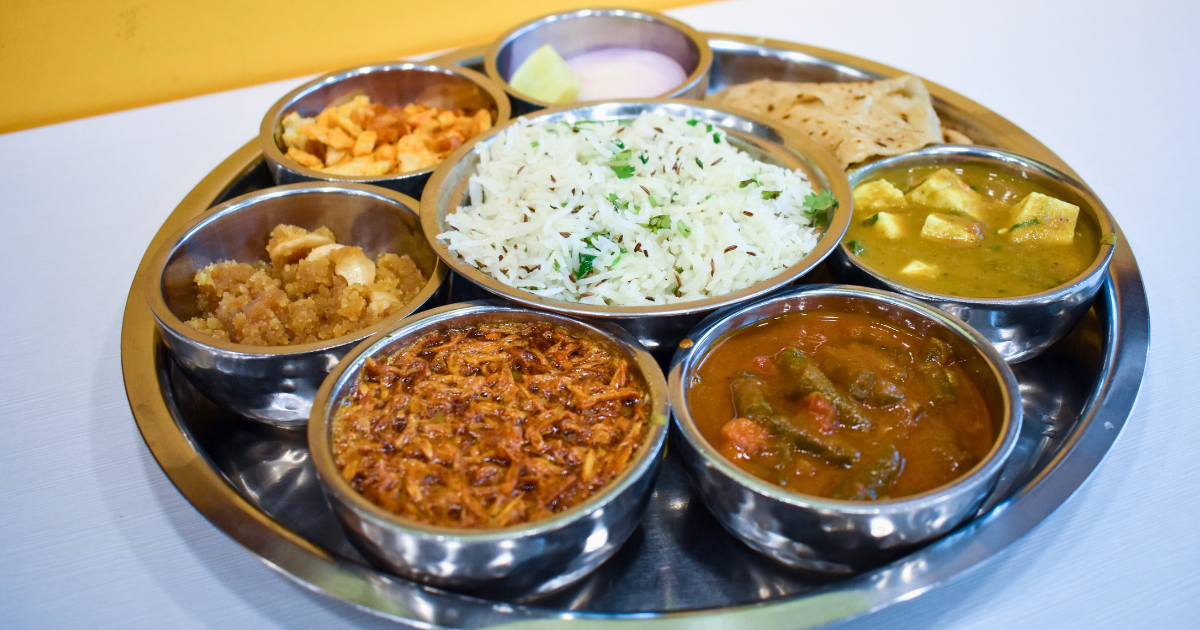
India holds dozens of distinct regional cuisines within a single country, and the differences between them are significant enough to plan an entire trip around.
Why is India one of the world's great food destinations?
India is a food destination unlike anywhere else because it holds dozens of regional cuisines inside a single country. Each state cooks with its own staples, spices and methods, and crossing into a neighbouring one can mean a complete change at the table. India's strength lies in this breadth, paired with the way cooking is embedded in religion, festivals and daily life.
Every region has its own food identity
Each Indian state cooks with its own staple grains, fats and spices, and the differences run deep. Punjab is built around wheat, dairy and slow tandoor cooking. Bengal favours rice and river fish, with mustard oil and a five-spice blend called panch phoron.
Tamil Nadu and Kerala anchor their meals in rice, lentils, coconut and curry leaf, while Gujarat balances sweet, sour and savoury notes inside a vegetarian thali. Travelling through three or four regions in a single trip shows how different one Indian kitchen can be from another.
Street food is part of everyday life
Street food in India is how millions of people eat their breakfast, lunch, evening snack and often dinner, every day of the working week. Office workers in Mumbai queue at vada pav (potato fritter sandwich) stalls during the morning rush.
Old Delhi's parathawalas have been frying flatbreads on the same lane since the 1870s, and Kolkata's kathi roll stands stay busy from afternoon into late evening. Visiting these stalls with a guide means eating the same things residents eat, often at the same places and the same prices.
Spices are used with regional precision
Indian cooking does not run on a generic curry powder. Each region uses its own spice combinations, with their own names and proportions. Garam masala in the north sits beside sambar powder in Tamil Nadu, panch phoron in Bengal and goda masala in Maharashtra.
The same individual spices also behave differently across regions. Turmeric is a base note in a Punjabi dal and a finishing colour in a Goan fish curry, while mustard appears as a tempering spice in southern cooking and as a pungent oil throughout Bengal. Understanding these regional approaches is one of the more rewarding parts of a culinary tour through India.
Food experiences go beyond restaurants
Most of the cooking worth understanding in India does not happen in restaurants. It happens in family kitchens, temple meal halls, Sikh gurudwaras and roadside dhabas (food stall) built for truck drivers. The langar at the Golden Temple in Amritsar feeds tens of thousands of people each day, free of charge, prepared by volunteers from the community.
A dhaba on the highway between Delhi and Amritsar will often turn out better dal makhani than most city restaurants, because the cooks are feeding the same regulars every day. Bringing these places into a food itinerary shifts the focus from menus to the people doing the cooking, and to the customs around how meals are shared.
Festivals and seasons influence what people cook
The Indian calendar runs on festivals, and most come with their own food. Onam in Kerala is marked by a sadhya, a vegetarian feast of more than twenty dishes served on a banana leaf. Pongal in Tamil Nadu takes its name from the sweet rice dish made for the harvest celebration. Diwali across the north sees sweet shops working overtime on barfi, ladoo and jalebi, while Eid in Old Delhi and Lucknow brings mutton biryani, korma and seviyan to the table.
Seasonal eating runs alongside this calendar. Alphonso and Langra mangoes appear in late spring, sarson da saag (mustard green curry) arrives with the Punjabi winter, and the monsoon brings hot pakoras (spiced fritter) and roasted corn cobs across most of the country.
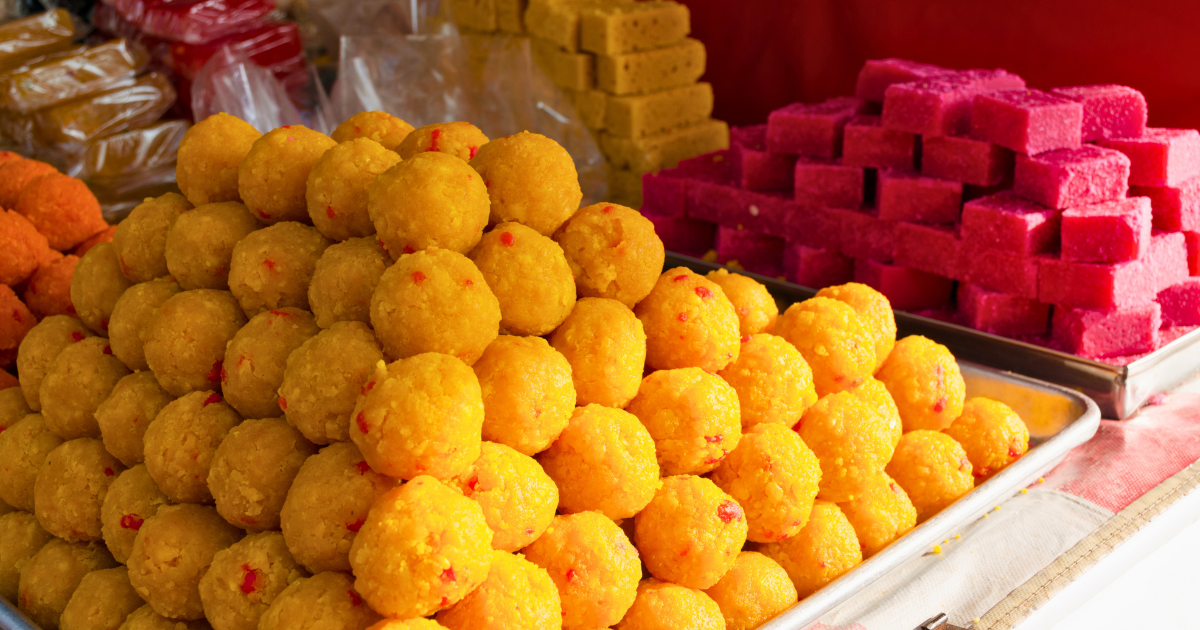
Indian festivals are tied to specific food traditions, with Diwali bringing weeks of intensive mithai production across North India and Onam in Kerala marking the year's most elaborate vegetarian feast.
Where are the best food cities in India?
The best food cities in India for a culinary trip are Delhi, Lucknow, Kolkata, Chennai, Madurai, Amritsar and Mumbai. Each represents a distinct regional cuisine, and visiting two or three across a single trip gives a far fuller picture of how the country eats than spending the whole journey in one place.
Delhi
Delhi sits at the centre of North Indian cuisine and carries a strong Mughal legacy in its cooking. Slow-cooked nihari, charcoal-grilled kebabs and yoghurt-based qormas all trace their lineage to the imperial kitchens of the Mughal court.
The lanes around Jama Masjid and Chandni Chowk in the old city remain the heart of Delhi's food culture, with chaat stalls, sweet shops and kebab houses that have operated since the 19th century. North Indian chaat (street food snack), including bhalla papdi, golgappa and aloo tikki, is also at its best here, eaten standing at small stalls in the late afternoon.
Lucknow
Lucknow is the home of Awadhi cuisine, developed in the kitchens of the Nawabs who ruled the region until the 19th century. The cooking is built around dum, a slow-steaming technique that draws flavour through long, gentle cooking rather than heavy spicing.
Galouti kebab, said to have been created for an ageing Nawab who had lost his teeth, is the city's most famous dish and is still served at Tunday Kababi in the old quarter. Lucknowi biryani is lighter than its Hyderabadi cousin, and the sweet shop culture of the city extends to malai paan, makhan malai and shahi tukda.
Kolkata
Kolkata is the centre of Bengali food culture, where the cooking runs on river fish, mustard oil and a careful balance between sweet, sour and bitter. Bengali meals are structured around a sequence of courses rather than a single plate, beginning with bitters and progressing through fish, meat or vegetable dishes before ending with sweets.
The sweets of Kolkata are a cuisine of their own. Rosogolla, sandesh and mishti doi are produced by sweet shops that have operated for over a century, and the city's street food, including puchka and jhal muri, holds equal weight in everyday eating.
Chennai
Chennai represents Tamil cuisine in its most accessible form, with a strong vegetarian tradition built around rice, lentils, coconut and tamarind. Tiffin culture is central to daily eating, with idli, dosa, vada and uttapam served from morning into evening at dedicated tiffin houses.
Filter coffee, served in a metal tumbler and saucer, is part of the city's daily rhythm, and the older neighbourhoods of Mylapore and Triplicane hold some of the most respected vegetarian restaurants in the country. Chettinad cuisine, brought from the south of Tamil Nadu, has a strong presence in Chennai too, bringing peppered meat and seafood dishes alongside the city's vegetarian tradition.
Madurai
Madurai is a temple city in southern Tamil Nadu with a food culture that runs alongside its religious life. The rural Tamil tradition of the surrounding region brings strong meat dishes into the city's cooking, sitting alongside the vegetarian food prepared for the Meenakshi Temple.
The streets around the Meenakshi Temple fill with food stalls at night, serving kari dosa, paratha rolls and the city's signature drink, jigarthanda, a cold preparation of milk, almond gum and ice cream. Travelling to Madurai gives a closer look at Tamil food away from the polish of the state capital.
Amritsar
Amritsar is the centre of Punjabi cuisine, built around wheat, dairy and the high heat of the tandoor. Dhaba culture began here on the Grand Trunk Road, where roadside cooks served truck drivers travelling between Delhi and Lahore.
The kulcha is the city's most distinctive dish, a stuffed flatbread cooked in a clay oven and served with chole and pickled onion at small shops across the old quarter. Amritsari fish, made with river sole coated in chickpea flour and spices, sits alongside butter-rich dishes like sarson da saag and makki ki roti, with thick lassi served in heavy glasses at long-running outlets like Ahuja and Gian.
Mumbai
Mumbai is India's most varied food city, drawing from Maharashtrian, Gujarati, Parsi, Goan, Mangalorean and South Indian cooking. Migration into the city over the past two centuries has produced a food culture that no other Indian city matches in breadth.
Street food is central to the city's identity, with pav bhaji, bhel puri, sev puri and ragda pattice eaten by office workers, schoolchildren and traders across the day. The Parsi cafe tradition, found at long-running places like Britannia and Kyani, brings dishes like keema pav, berry pulao and sali boti to the table, while the working coastal restaurants of Khar and Bandra serve prawn curries, sol kadhi and fresh seafood from the day's catch.
When is the best time to visit India for culinary tours?
The best time to visit India for a food tour is between October and March, when the climate is cool and dry across most of the country. This window covers North India, the central states, Rajasthan and the south at their most comfortable, and avoids the high heat of April to June and the monsoon of July to September.
For most travellers, late October to mid-February is the sweet spot. Daytime temperatures are mild, evenings are pleasant for market walks, and food activity stays constant across the major cities. Kerala and Tamil Nadu in the south are at their best from December to February, which suits longer trips that include backwater cruises and rural visits.
Specific festivals can push a trip outside this main window. Diwali in late October or early November is a strong period for sweet-focused travel through North India, while Onam in Kerala falls in late August or September during the monsoon. Mango season runs from April to May, with the trade-off of daytime temperatures that can reach 40°C across much of the country.
How many days do you need for a culinary trip across India?
A culinary trip across India works best with 12 to 18 days, depending on how many regions the itinerary covers. A shorter trip of 8 to 10 days is enough to explore one region in detail, while 16 to 18 days is the standard length for itineraries that move through north, south and east India in one trip.
Single-region trips suit travellers who want to understand one cuisine properly. Eight to ten days in Rajasthan, Kerala or Tamil Nadu gives time for two or three cities, market visits, cooking classes and a stretch in the countryside without rushing between places.
Multi-region culinary tours usually run 14 to 18 days. A 16-day route like the Flavours of India Food Tour takes in Delhi, Lucknow, Kolkata, Chennai, Cochin and Mumbai, covering four major culinary traditions in a single itinerary, while an 18-day route like the South India Food Tour gives a closer look at Tamil and Keralan cooking.
Pacing matters as much as length. Trying to cover four or five regions in two weeks usually leaves travellers tired and unable to absorb what they are eating. A well-built food itinerary balances cooking activities with rest days, lighter sightseeing and time to enjoy meals without rushing to the next stop.
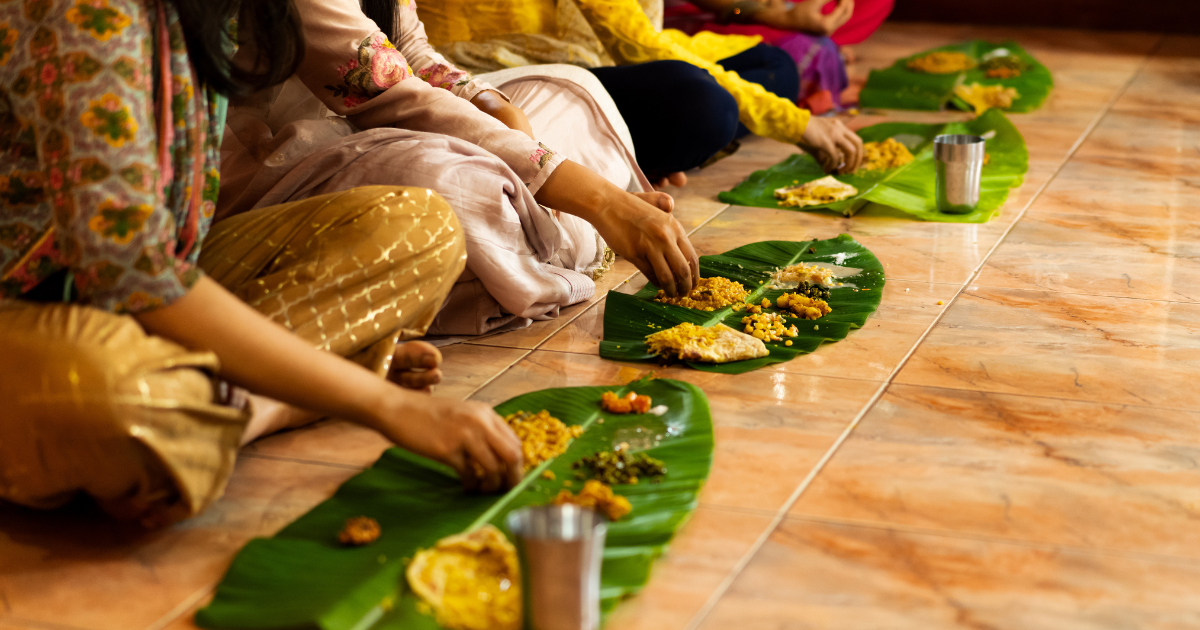
A well-designed food itinerary in India balances regional experiences like a Kerala banana leaf feast with cooking classes, market walks and meals with local specialists.
What does a food tour of India actually include?
Most food itineraries in India move through four kinds of experience. A day might start at a morning market with a guide pointing out unfamiliar produce, continue with a cooking class in someone's home, include a long lunch with a respected cook or food writer, and end at a restaurant that has been serving the same dish for a century.
Guided market walks and street food tastings
Market walks usually begin in the early morning, when produce arrives fresh and traders set up for the day. A local guide leads travellers through fruit and vegetable sections, spice merchants, grain dealers and fish or meat counters, explaining regional ingredients and how they appear in local cooking.
Street food tastings often follow in the same area or move to a dedicated food lane in the afternoon or evening. The guide chooses stalls with high turnover and a strong local reputation, which keeps the food fresh and the experience reliable. Walking through a city's food district with someone who knows the vendors well is often more memorable than any restaurant meal.
Cooking classes in family homes
Cooking classes in family homes are smaller and more personal than commercial cooking school sessions. A host cook, often a senior member of the family, prepares two or three dishes alongside the visiting travellers, explaining ingredients, techniques and the regional variations of each recipe.
Most classes begin with an introduction to the spice box, including jars of cumin, mustard seeds, fenugreek, turmeric and dried red chillies that anchor most Indian cooking. The meal is then eaten together at the family table, with conversation often shifting from the food itself to wider topics like seasonal eating, religious traditions and the household's regional background.
Meals with chefs, food writers and heritage cooks
Meals arranged with chefs, food writers or older heritage cooks add a layer of expert insight to a food trip. These sessions usually involve a long, multi-course lunch or dinner at a private setting, with the host walking through each dish and answering questions about ingredients, history and family recipes.
Many heritage cooks are women who have spent decades preserving family or community recipes that are not widely available in restaurants. Food writers and journalists, on the other hand, bring a wider perspective on how regional cuisines have changed over time and where the most respected practitioners are still working. Meals like these are usually arranged in advance through trusted local contacts.
Specialist restaurant reservations and historic eateries
Some of India's best-known restaurants and longest-running eateries require advance booking, and a planned food itinerary builds these into the trip from the start. Examples include Karim's near the Jama Masjid in Delhi and Mavalli Tiffin Rooms in Bangalore, each of which has been operating for over a century.
These restaurants often run with limited seating and high demand, particularly in the evening or during festival weeks. Visiting them is less about novelty and more about tasting versions of dishes that have been refined across generations in the same kitchen. Some restaurants also offer behind-the-scenes access to their kitchens, which adds another layer of understanding to the meal.
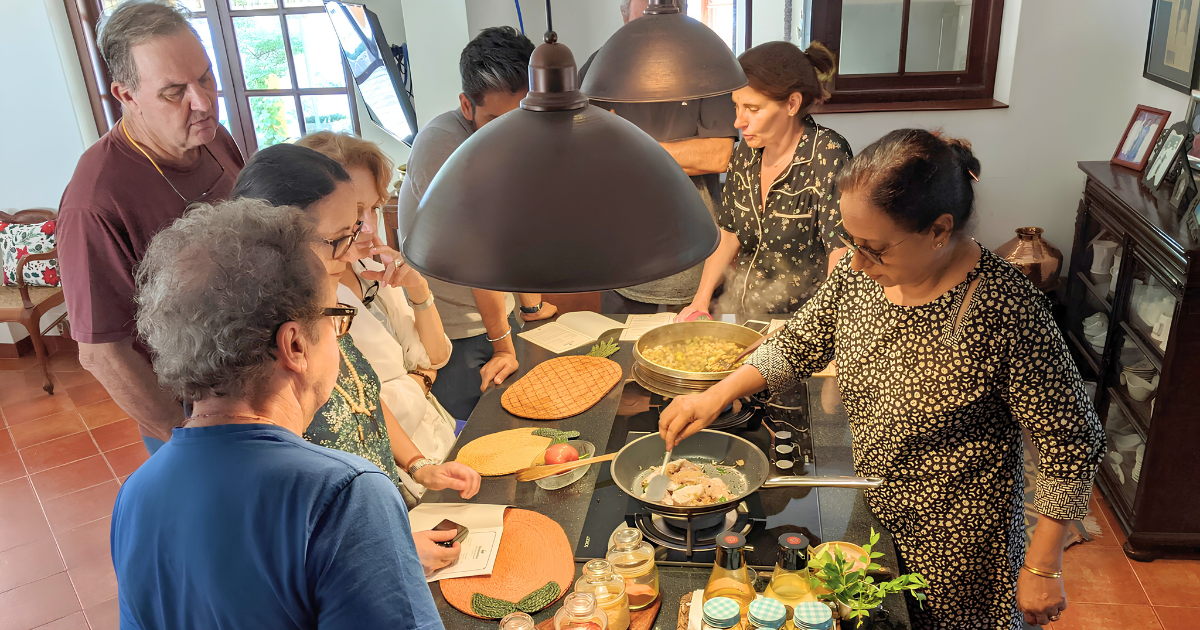
Food tours of India combine guided market walks, cooking classes in family homes, meals with heritage cooks and reservations at restaurants that have been serving the same dishes for generations.
Iconic regional dishes worth planning a route around
Some Indian dishes are tied so closely to specific cities or states that the trip is worth building around them. Tasting each at its source gives a clearer sense of regional cooking than any restaurant abroad can match.
Kathi rolls and the street food of Kolkata
The kathi roll was created at Nizam's restaurant on Hogg Market in Kolkata in the 1930s. The original was a kebab wrapped in a paratha for office workers who wanted something quick but did not want oily hands at their desks, and it has since become one of the city's signature foods.
Modern versions include chicken, mutton, paneer and egg fillings, with the paratha rolled tightly around chopped onion, green chilli and a squeeze of lime. The street food around College Street, New Market and Park Street keeps the same character, with stalls selling jhal muri tossed in a tin, fish fry served in newspaper, and puchka filled with cold tamarind water.
Pav bhaji, vada pav and Mumbai's working lunch traditions
Pav bhaji emerged in the textile mills of central Mumbai in the mid-19th century, when workers needed a hot, filling lunch that could be eaten quickly on the factory floor. The bhaji is a mashed vegetable curry cooked with butter and a specific masala blend, served with two soft bread rolls toasted in the same butter.
Vada pav arrived later, in the 1960s, as a Marathi answer to the imported sandwich. A spiced potato vada is deep-fried, slipped inside a bun with green chutney and garlic chutney, and eaten in the time it takes to wait at a traffic light. Mumbai's working-day eating still runs on these two dishes, with the better stalls clearing several hundred orders before lunch is over.
Sadhya and the vegetarian feasts of Kerala
The sadhya is Kerala's traditional vegetarian feast, served on a fresh banana leaf with a fixed sequence of dishes. A full sadhya can include more than 25 items, with rice and sambar at the centre, alongside pickles, fried banana chips, several thoran (dry vegetable preparations), aviyal, kalan, olan and three or four payasam sweets at the end.
While the sadhya is most strongly associated with Onam in late August or September, scaled-down versions are served daily at heritage homestays in the backwaters, at temple kitchens like the Thrissur temple complex and at restaurants in Cochin and Thiruvananthapuram. Eating the meal from a banana leaf, in a fixed order using only the right hand, is part of the experience.
Dal makhani, butter chicken and the kitchens of Punjab
Butter chicken and dal makhani both originated at Moti Mahal in Daryaganj, Delhi, in the late 1940s. Chef Kundan Lal Gujral, who had moved from Peshawar after Partition, created butter chicken to use up tandoori chicken that had dried out, simmering it in tomato, cream and butter to revive the texture.
Dal makhani is built around black urad lentils and red kidney beans, slow-cooked overnight with butter, cream and tomato until the texture turns thick and almost smoky. The best versions are still found in Delhi at Moti Mahal and Bukhara, and across Punjab at smaller dhabas where the lentils are kept warm on charcoal embers from morning to night.
Gujarati thali and the vegetarian traditions of the west
A thali, which translates to plate, is a meal format served across every Indian state. Most regional versions prioritise one or two dominant flavours, but the Gujarati thali balances sweet, sour, salty and spicy notes simultaneously, a combination that runs through almost every bowl on the platter. It arrives on a steel platter with eight to twelve small bowls, with dishes like undhiyu (a spiced winter vegetable mix), kadhi (a yoghurt and chickpea-flour curry) and dhokla (steamed fermented batter) varying by season.
Gujarati thali restaurants run on an unlimited-refill principle, with waiters circulating to top up bowls until the diner signals to stop. Agashiye in Ahmedabad, Tulsi in Vadodara and Rajwadu just outside Ahmedabad serve the most respected versions, drawing from Kathiawadi (drier, spicier) and Surti (sweeter, oilier) regional traditions in equal measure.
Masala dosa and South Indian tiffin culture
Masala dosa originated in the Udupi region of coastal Karnataka and spread south through Tamil Nadu and Kerala in the early 20th century. The crepe is made from a fermented batter of rice and urad dal, cooked thin on a hot griddle, then folded over a filling of spiced potato cooked with mustard seeds, curry leaves and turmeric.
Tiffin houses across Bangalore, Mysore and Chennai serve dosa from breakfast through to early evening, alongside idli, vada, uttapam and pongal. Vidyarthi Bhavan in Basavanagudi has been serving its famously thick masala dosa since 1943, and Murugan Idli Shop in Chennai is known for soft, fermented batter that holds the filling well.
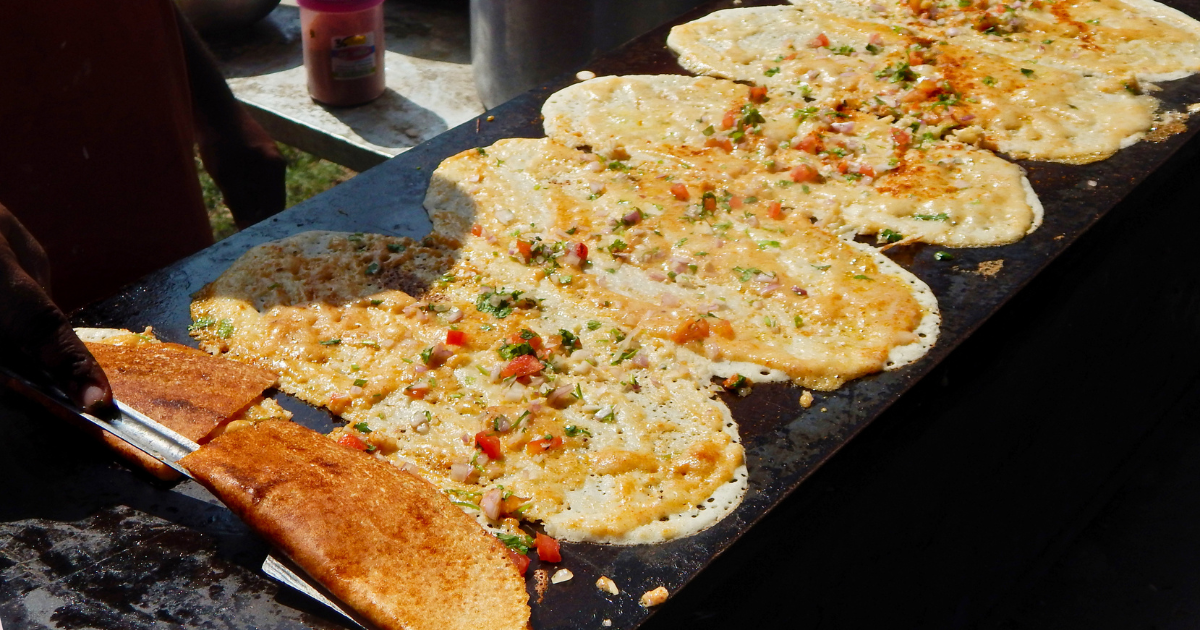
Masala dosa originated in the Udupi region of coastal Karnataka and spread through Tamil Nadu and Kerala in the early 20th century, becoming one of South India's most widely eaten everyday dishes.
Practical considerations for food travel in India
India accommodates more dietary needs than most travellers expect. Spice levels, vegetarian and vegan requirements, allergies and stomach sensitivity can all be planned around without limiting the experience of the food.
How to handle spice levels and dietary preferences
Indian cooking offers far more range in spice levels than many travellers expect. Bengali, Gujarati, Keralan and Mughlai cuisines build flavour around aromatic spices, ginger and black pepper rather than chilli heat, while Andhra and Chettinad sit at the hotter end of the scale. A well-planned trip moves comfortably across the full range.
Hosts and restaurants will adjust spice on request, particularly during cooking classes and private meals. Travellers new to Indian heat often start with milder regional traditions like Gujarati or Bengali in the first few days, then build up to spicier styles later in the trip. Lassi, rice and raita are the most effective ways to balance heat at the table.
Travelling as a vegetarian, vegan or with food allergies
India is one of the easiest countries in the world for vegetarians. Roughly a third of the population eats no meat, and most restaurants maintain separate vegetarian menus, often with a green dot marking each dish. Pure vegetarian restaurants, particularly in the south and west, work entirely without meat or fish, and many also cater to Jain travellers who exclude onion and garlic.
Vegan travellers do well in the south and along the coast, where most dishes are built on rice, coconut, lentils and vegetables rather than dairy. Gluten-free eating is also straightforward across South India thanks to the rice and lentil base of most meals. Travellers with nut allergies can flag this with their guide and host, and most South Indian, Gujarati and Bengali cooking sits clear of nuts, leaving plenty of options even when Mughlai dishes like kormas and certain kebabs are left off the menu.
What to pack for the food tour of India
A little preparation goes a long way for food travel in India. Probiotic supplements taken for two weeks before departure help the digestive system adjust faster, and travellers often carry a short course of antibiotics from their GP as a precaution. Easing in with vegetarian meals in the first few days, sticking to bottled or filtered water and skipping ice in cold drinks lets the body settle into the new routine.
A small selection of items makes the trip more comfortable. Rehydration sachets, basic anti-diarrhoeal medication, hand sanitiser and a refillable filtered water bottle are useful to have on hand. Light, breathable clothing suits the climate from March through October, and comfortable walking shoes pay off quickly during long market walks and food district visits.
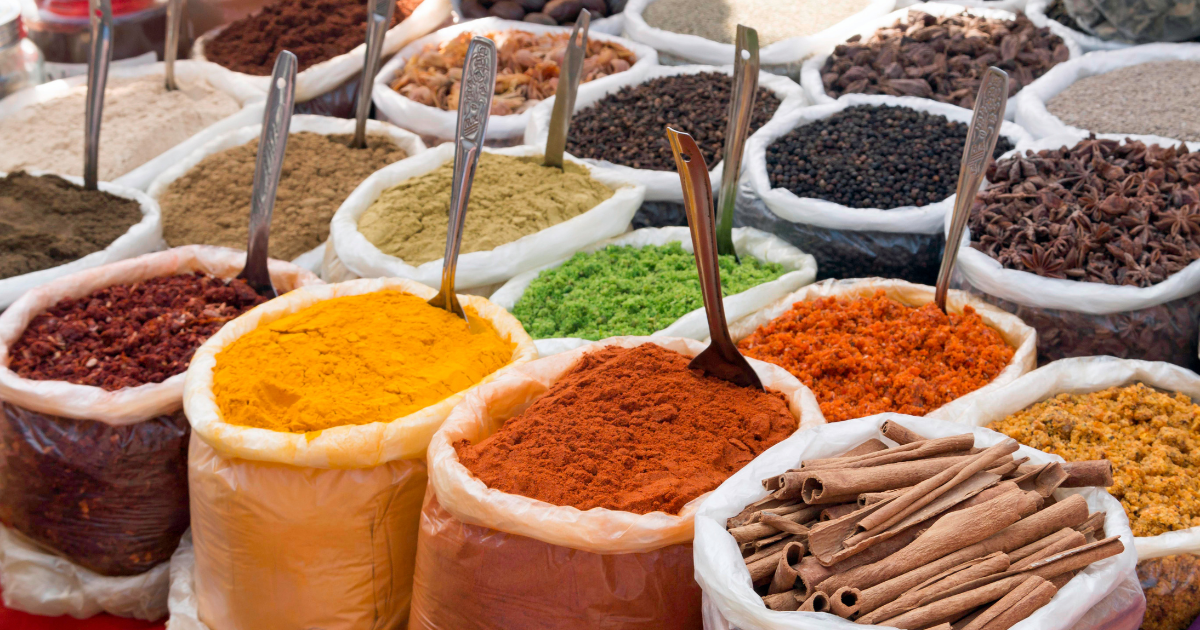
Indian cooking offers far more range in spice levels than most travellers expect, with milder Gujarati and Mughlai traditions sitting alongside the intense heat of Andhra and Chettinad.
Planning an Indian food tour with India Unbound
India Unbound has been designing private food tours of India since 2007. We build tailor-made itineraries around the traveller's interests, with private drivers, expert local hosts and carefully chosen accommodation throughout the trip. Food itineraries can run as multi-region routes covering north and south India, or as deeper trips focused on a single regional cuisine.
Each food tour is built around the time available, the regions of most interest and the season best suited to the cooking. The balance of market walks, cooking classes, home meals and restaurant reservations is adjusted to fit each traveller's pace. Explore our India food tours or contact our team to begin planning a journey tailored to your interests.