
What To Know Before Planning A Sikkim Trek
Sikkim sits in a fold of the Indian Himalaya, bordered by Nepal, Tibet and Bhutan. It is one of India's smallest states, yet its terrain shifts from subtropical forest to glaciated peaks above 7,000m. Kanchenjunga, the world's third-highest mountain at 8,586m, dominates its northern skyline and forms the centerpiece of most trekking routes in the region.
Trekking in Sikkim is a different proposition to the more established across the Indian Himalaya. Trails here pass through dense rhododendron forest, across alpine meadows and along glacial moraines, often with far fewer people on them. The state's permit system and requirement to trek with a registered agency mean routes remain relatively uncrowded, even on popular trails like the Goechala trek.
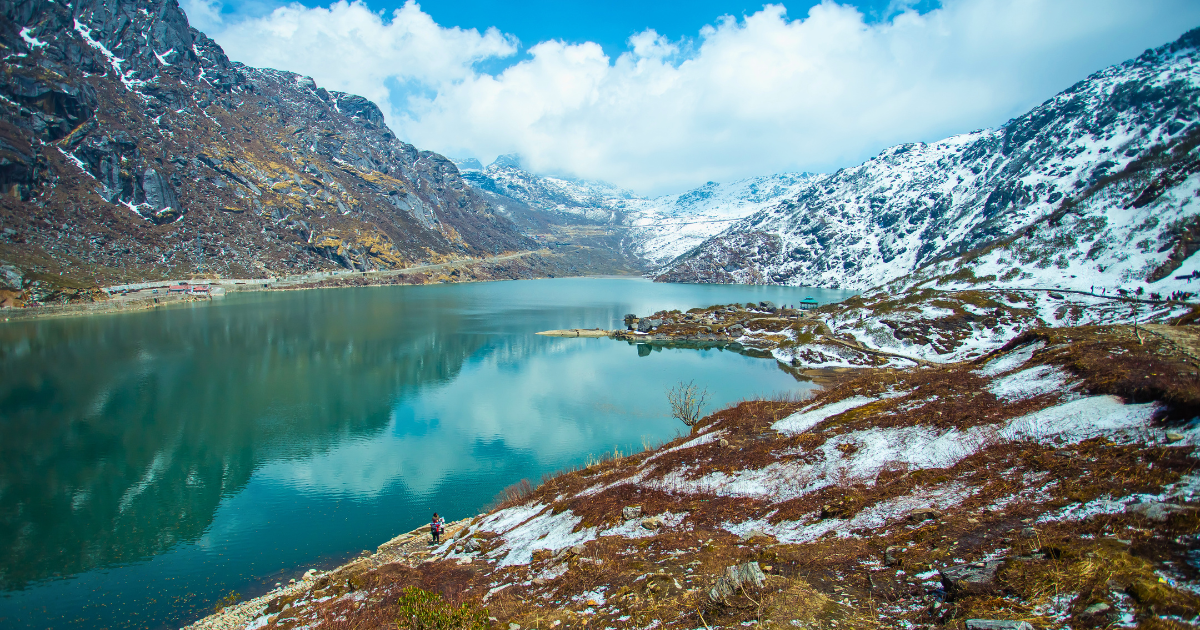
Tsomgo Lake at 3,753m, is a popular day trip from Gangtok and a gentle introduction to Sikkim's high-altitude landscape.
Why Sikkim draws trekkers to the Eastern Himalayas
Most Himalayan trekking conversations start with Nepal or Ladakh. Sikkim rarely comes up first, partly because it is harder to access and partly because its permit requirements limit the kind of independent trekking that draws crowds elsewhere. That relative obscurity is a large part of its appeal.
A compressed landscape
Sikkim covers just 7,096 square kilometres, but the altitude range within that area is vast. Valley floors around Yuksom, one of Sikkim's many hill stations, sit at roughly 1,780m, while the Goechala viewpoint reaches over 4,900m, and the surrounding peaks push well beyond 7,000m. That compression means trekkers move through multiple ecological zones in a matter of days, from dense subtropical forest and bamboo groves into rhododendron woodland, then above the treeline into alpine meadow and glacial moraine.
Biodiversity along the trail
Sikkim is also one of the most biodiverse regions in the Himalayas. The lower trails pass through sections of Khangchendzonga National Park, a UNESCO World Heritage Site that covers more than 25% of the state's total area. Rhododendron species here number in the dozens, and the forests support wildlife including red pandas, musk deer and Himalayan black bears, though sightings are uncommon on busier routes.
A Buddhist kingdom on foot
Sikkim was an independent Buddhist kingdom until 1975, and that heritage is still visible in the monasteries, prayer flags and village life along the trekking corridors. Yuksom, the starting point for the Goechala trek, was the site of the first coronation of a Sikkimese king in 1642. Trekking here tends to feel less like a purely outdoor pursuit and more like moving through a landscape that is still actively shaped by its history and traditions.
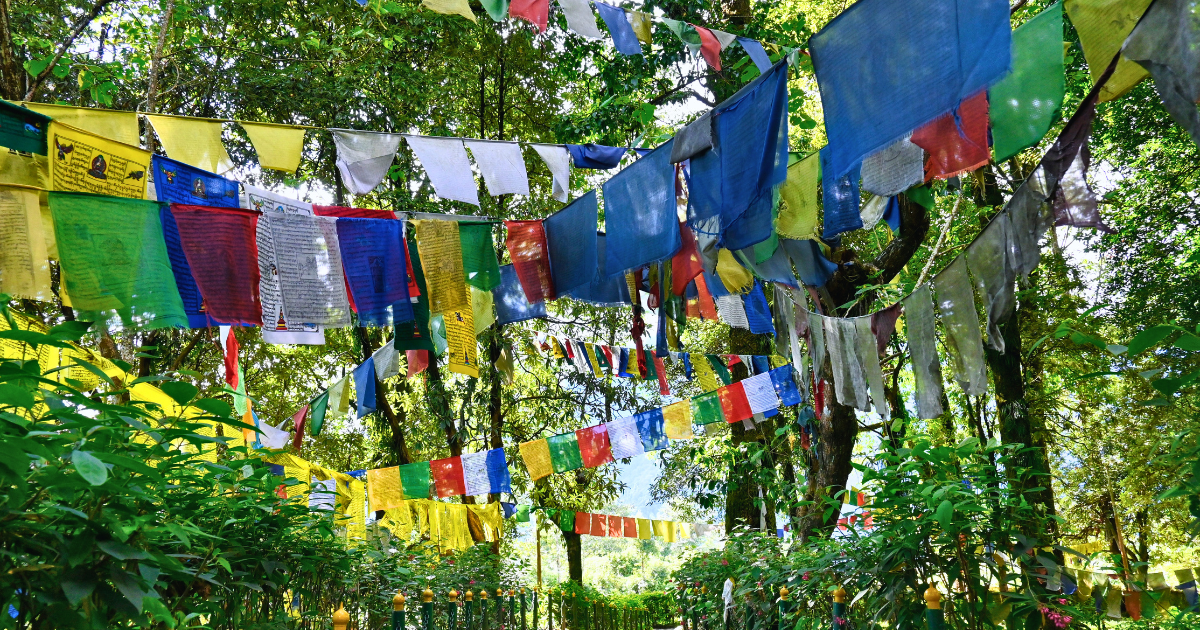
Prayer flags line the trekking trails throughout Sikkim, a reminder of the state's Buddhist heritage.
Do you need a permit for trekking in Sikkim?
Yes, and the permit situation in Sikkim is more layered than in most Indian states. The entire state falls within a restricted zone due to its borders with China, Nepal and Bhutan, and the permit framework exists to manage access to sensitive and ecologically important areas. Most trekking routes pass through national parks or protected zones, so there are a couple of layers to work through.
The Sikkim travel permit (Inner Line Permit)
Indian nationals do not need a permit to enter Sikkim, but foreign visitors do. The Restricted Area Permit, still widely known as the Inner Line Permit (ILP), is required for all foreign nationals including Overseas Citizens of India holders. It is free of charge and valid for 30 days, with the option to extend up to 60 days.
Applications can now be submitted online through the Sikkim government's tourism portal, and it is best to have approval confirmed before reaching the border. Entry checkpoints at Rangpo and Melli will check for it. Foreign nationals are also asked to register with the Foreigners Registration Office in Gangtok within 24 hours of arrival, which is a quick formality.
Protected area permits and restricted area permits
The ILP covers entry into Sikkim, but trekking routes require a separate permit. Most major treks, including the Goechala trek and Dzongri trek in West Sikkim, pass through Khangchendzonga National Park and need a Protected Area Permit (PAP). Routes in North Sikkim, such as the Green Lake trek, involve additional clearance through the state government and the Indian Mountaineering Foundation in Delhi.
PAP applications are submitted through a registered tour operator, and foreign nationals need to be part of a group of at least two. Processing usually takes a day or two once the ILP is in place, though allowing a little extra time during peak season is sensible.
Permit considerations for foreign nationals
There are a few extra steps for foreign travellers to keep in mind. Some areas in North Sikkim, including Gurudongmar Lake, are not accessible to foreign nationals due to their proximity to the international border. A registered local guide is required for all trekking permits, and the tour operator handles the application process. Documents typically needed include a passport, valid visa, ILP confirmation and a few passport-sized photographs.
Working with a Sikkim-registered trekking agency from the start makes the whole process much simpler. The agency coordinates the timing between the ILP and PAP, prepares the paperwork and makes sure everything is sorted before the trek begins. Having someone local manage the logistics genuinely saves time and removes any guesswork.
When is the best time to trek in Sikkim?
Sikkim receives some of the heaviest rainfall in the Indian Himalayas, so the timing of the visit matters more here than in drier mountain regions like Ladakh or Spiti. The trekking calendar is shaped almost entirely by the monsoon, which runs from June through September and effectively splits the year into two usable windows.
Pre-monsoon season (March to May)
Spring is one of the two main trekking seasons in Sikkim. Temperatures at mid-altitude are mild, ranging from around 5°C to 25°C, and the skies are generally clear through March and April before cloud cover starts to build in May. The biggest draw of this window is the rhododendron bloom. Lower and mid-elevation trails pass through forests where dozens of rhododendron species flower between late March and early May, turning entire hillsides red, pink and white.
The Goechala trek and Dzongri trek are both accessible during this period, and mountain visibility tends to be good, particularly earlier in the season. By late May, pre-monsoon moisture starts to arrive and conditions become less predictable.
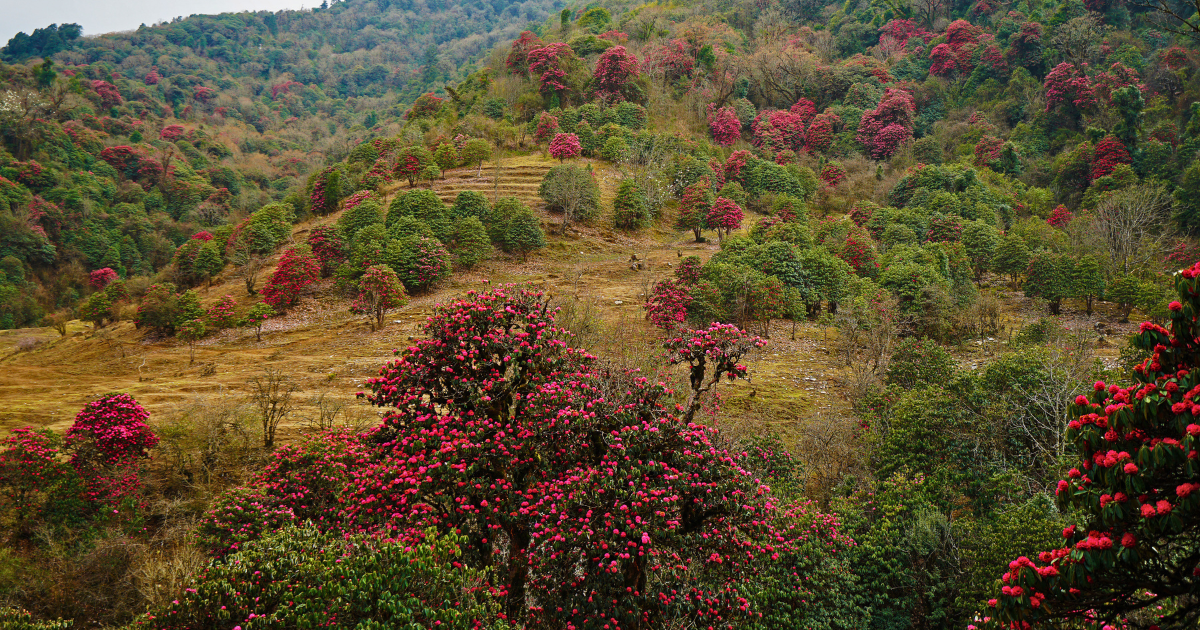
Rhododendrons flower across Sikkim's lower and mid-elevation trails between late March and early May.
Post-monsoon season (October to December)
The autumn window opens once the monsoon retreats in late September or early October. Skies clear quickly and visibility sharpens, making this the preferred season for trekkers wanting unobstructed views of the Kanchenjunga massif and surrounding peaks. Daytime temperatures at altitude are cool but comfortable, though nights get cold, dropping well below freezing above 4,000m by November.
October and November are widely considered the best months for high-altitude trekking in Sikkim. The trails are drier than in spring, the air is crisp, and the post-monsoon light gives the landscape a particular clarity. By December, snowfall begins to close higher passes and some routes become inaccessible until the following spring.
Can you trek during monsoon or winter?
The monsoon months of June to September bring heavy and sustained rainfall to Sikkim, and most trekking operators pause their schedules during this period. Trails become waterlogged, visibility drops considerably, and landslide risk increases along mountain roads. It is not the safest window for high-altitude trekking, and reaching trailheads can be unpredictable when roads are affected by weather.
Winter, from January to February, opens up some possibilities on lower-altitude routes, though the options are limited. Snow closes many of the higher passes, temperatures at altitude drop well below freezing, and daylight hours are shorter. Most organised treks resume only in March, and permit processing can be slower during the off-season.
Popular trekking routes in Sikkim
Sikkim's trekking routes range from week-long high-altitude expeditions to shorter, gentler walks through forest and sanctuary land. Most trails are concentrated in the western and northern parts of the state, with Yuksom and Lachen serving as the two main trailheads.
The Goechala trek
The Goechala trek is the most popular high-altitude trek in Sikkim. Starting and ending at Yuksom in West Sikkim, the route covers approximately 90km round trip over ten days, climbing from 1,780m through dense forest and rhododendron woodland to a final viewpoint at roughly 4,600m. The actual Goechala Pass sits at 4,940m but has been restricted since 2017, so the viewpoint is the highest permitted point.
The trail passes through Khangchendzonga National Park, moving through distinct ecological zones as it gains altitude. A pre-dawn climb to Dzongri Top at around 4,020m reveals a 180-degree panorama of the Kanchenjunga range, and the summit day starts as early as 1:00am, timed to catch sunrise on the mountain.
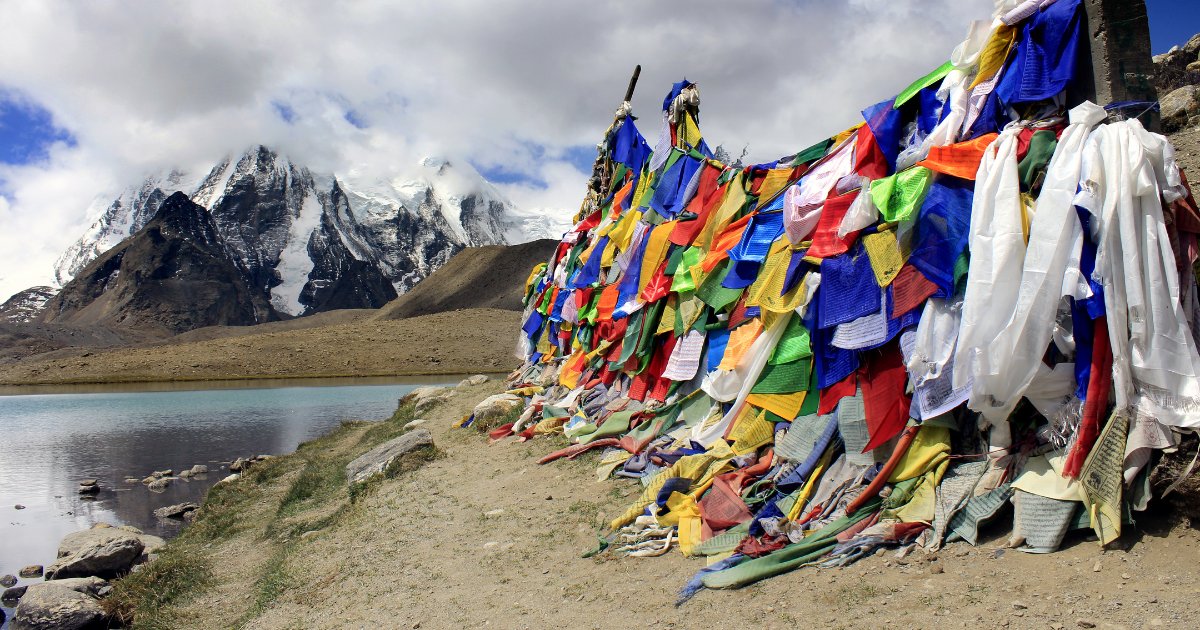
Prayer flags flutter beside Gurudongmar Lake at over 5,000m in North Sikkim, one of the highest lakes in the world.
The Green Lake trek
The Green Lake trek approaches Kanchenjunga from the north, starting from Lachen in North Sikkim rather than Yuksom. It follows the Zemu River valley to the edge of the Zemu Glacier, reaching Green Lake at approximately 5,050m over 10 to 14 days. This is a quieter, more expedition-style experience compared to Goechala, with no trekkers' huts along the route and terrain above 4,000m that is predominantly boulder and moraine.
The permit process is more involved, requiring clearance from both the state government and the Indian Mountaineering Foundation in Delhi. The reward is an unobstructed view of the Kanchenjunga massif from its northern side, including peaks like Siniolchu, Simvo and Nepal Peak.
The Dzongri trek
The Dzongri trek follows the same trail as the Goechala route but turns around at Dzongri Top, reducing the trip to five or six days. The trail passes through the same forests and rhododendron belts, and the sunrise view of the Kanchenjunga range from Dzongri Top at around 4,020m remains one of the highlights of trekking in Sikkim.
The shorter duration means less overall physical demand while still reaching a meaningful altitude and offering genuine high-mountain scenery. It is a strong option for those with limited time or for anyone looking to experience high-altitude trekking in Sikkim without the longer commitment of the full Goechala route.
The Barsey Rhododendron Sanctuary trek
The Barsey Rhododendron Sanctuary trek in South Sikkim is the gentlest of the well-known routes, reaching a maximum altitude of around 3,000m. The trek can be completed in three to four days, with a moderate walking tour that suits first-time trekkers. It is best done in April and May when the sanctuary's dozens of rhododendron species are in full bloom, covering the hillsides in colour.
The Singalila Ridge, which forms the border between Sikkim and West Bengal, runs through the sanctuary and offers long views of the Kanchenjunga range and, on clear days, Everest. For those new to Himalayan trekking, it is a welcoming and rewarding starting point.
How fit do you need to be for a Sikkim trek?
The level of fitness required depends on the route chosen. Shorter, lower-altitude treks like the Barsey Rhododendron Sanctuary or Singalila Ridge stay below 3,000m and require only a reasonable level of general fitness. Higher routes like the Goechala trek are more demanding, with trekking days of six to eight hours across forest trails, rocky paths and glacial moraine.
Altitude is the other factor to consider. The body needs time to adjust to reduced oxygen at higher elevations, which is why most itineraries include acclimatisation days at key points along the route. A steady pace, good hydration and open communication with the trek leader all make the adjustment easier. With the right preparation and a well-paced itinerary, most reasonably active people find these treks achievable and deeply rewarding.
What to pack for a Sikkim trek?
Sikkim's weather shifts quickly with altitude and season, so layering is the most important packing principle. Even outside the monsoon months, rain can arrive without warning, and nights above 3,000m get cold year-round. Packing smart and light makes all the difference on the trail.
Clothing
A moisture-wicking base layer, a warm fleece or down mid-layer, and a waterproof shell jacket with a hood work well across most conditions. Thermal inner layers, a warm hat and gloves add comfort at higher camps, where temperatures can drop to minus 5°C after dark. Quick-dry trekking trousers are more practical than jeans, and a spare set of dry clothes for camp is always a welcome luxury at the end of a long day.
Footwear
A good pair of broken-in trekking boots with ankle support and a waterproof lining goes a long way on Sikkim's varied terrain. Taking the time to wear them in before the trip makes a noticeable difference on the trail. A pair of lightweight sandals or camp shoes for the evenings gives feet a well-earned rest.
Gear
A daypack of around 20 to 25 litres is enough to carry water, snacks, a rain jacket and a camera during the day, while porters or pack animals take care of the heavier bags between camps. Trekking poles are a nice addition for steep descents and help keep the knees fresh over longer days. A headlamp is handy for early morning starts, and a refillable water bottle helps with staying hydrated at altitude.
Sun and health essentials
Sunscreen and sunglasses with UV protection are worth packing for higher elevations, where the sun is stronger than it feels. A basic first aid kit with blister plasters, pain relief and any personal medication is good to have on hand. Altitude sickness tablets like Diamox are worth discussing with a doctor before departure.
Gear hire
Not everything needs to come from home. Sleeping bags, trekking poles and down jackets can be hired in Gangtok and Yuksom, which keeps luggage lighter for the journey in. Personal boots are the one item worth bringing from home, since fit and comfort matter most on the trail.
Can you trek in Sikkim without a guide?
Most trekking routes in Sikkim pass through national parks or protected areas, and the permit system means trekkers need to be accompanied by a registered local guide and book through an authorised tour operator. This applies to all the popular routes, including the Goechala trek, Dzongri trek and Green Lake trek. Foreign nationals also need to be part of a group of at least two, with permits arranged through the agency.
Rather than being a limitation, this setup tends to enhance the experience. Local guides bring knowledge of the terrain, weather patterns and altitude management that adds both safety and depth to the trek. They also take care of logistics like campsite setup, meals and forest checkpoint registration, which leaves more time and energy for enjoying the trail.
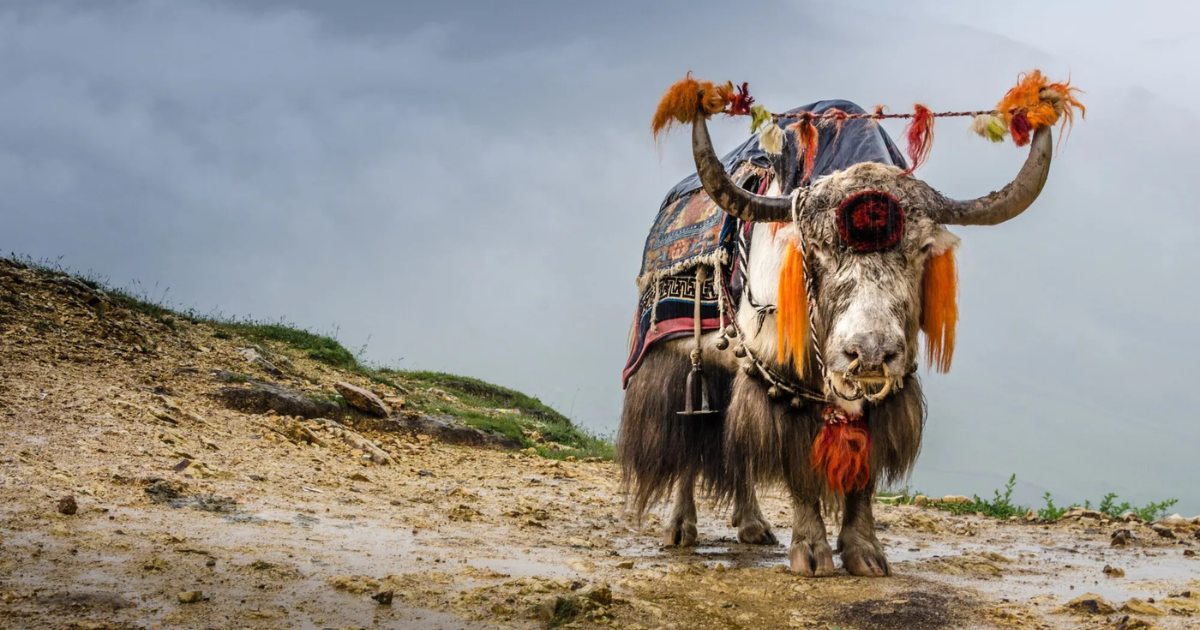
Yaks are a familiar presence along Sikkim's trekking routes, used to carry supplies to higher camps.
Planning a Sikkim trek with India Unbound
India Unbound has been designing custom-made journeys across India since 2007. As regional specialists with more than two decades of experience, we craft private itineraries for travellers who want to go beyond the usual routes and explore India in depth. To find out more about trekking in Sikkim as part of a wider Indian journey, get in touch to start building a tailor-made itinerary.