
India is home to some of the most varied wildlife habitats in Asia. Dense sal forests cover the central highlands, open grasslands stretch along the Brahmaputra floodplains, dry scrubland defines much of Rajasthan and Gujarat, and thick evergreen corridors run through the Western Ghats. These environments sit within a single country, yet each one supports a distinct set of species adapted to its particular landscape.
Five species have come to represent this ecological spread. But, unlike the African Big 5, which originated as a hunting term, the Indian grouping reflects the country's habitat diversity and the conservation work that has helped each of these animals hold on in the wild.
These five species live in different regions, in different ecosystems, and under different conditions. Knowing where each one is found and what drives its population today is a practical starting point for anyone planning a wildlife safari in India.
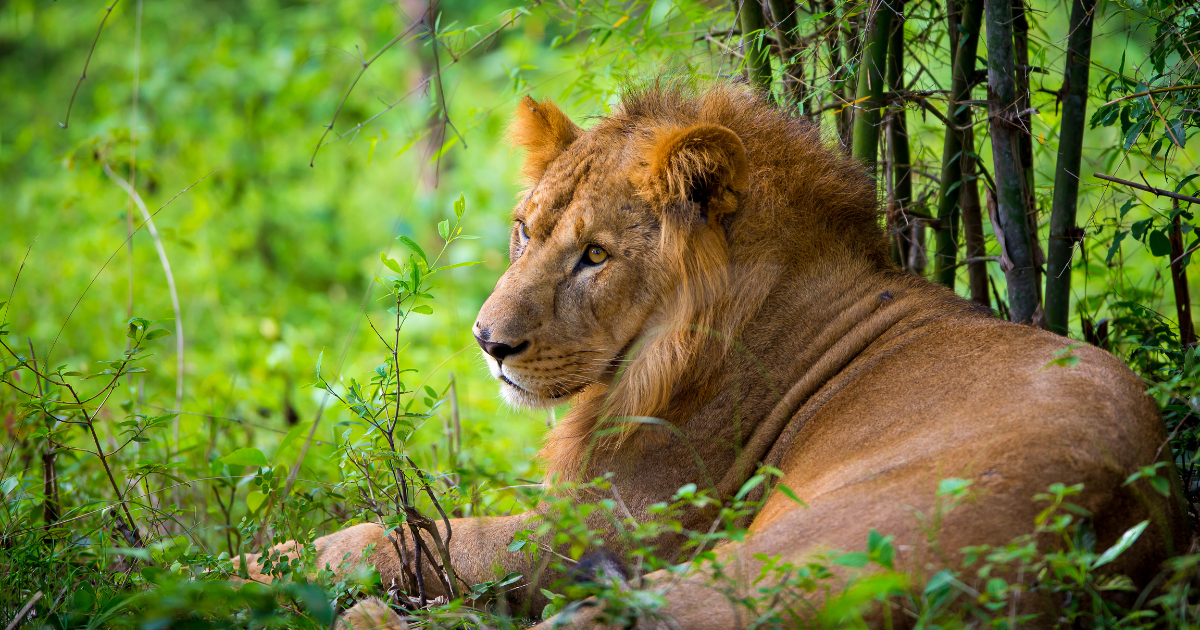
India's Big 5 brings together the country's most recognisable large mammals across a network of national parks spanning four states.
What are the Big 5 animals of India?
The Big 5 is a term borrowed from African safari culture, where it originally referred to the five animals considered most difficult to hunt on foot. In India, the phrase has been adapted to describe five large mammals that between them represent the country's most significant wildlife regions.
The Indian Big 5 are the Bengal tiger, the Asiatic lion, the Indian leopard, the one-horned rhinoceros and the Asian elephant. No single national park is home to all five. The tiger is found primarily across central and northern India, while the Asiatic lion exists only in one corner of Gujarat. Leopards are the most widespread of the five but also the most elusive. The one-horned rhinoceros is concentrated in the floodplains of Assam, and wild elephant herds range across the southern and northeastern states.
What makes this grouping useful for travellers is that it maps closely to India's major safari regions. Each species anchors a different part of the country, and a journey built around two or three of them will typically cover a good cross-section of Indian wildlife habitat.
Bengal tiger
The Bengal tiger is India's most recognisable wild animal, and the country is home to around three quarters of the world's remaining wild population. The most recent national estimation recorded 3,682 tigers across 20 states, more than double the figure from two decades ago. The recovery is a major achievement of modern conservation, shaped by Project Tiger, a programme launched in 1973 that now oversees a network of more than 50 dedicated reserves.
As the largest of the surviving tiger subspecies, the Bengal tiger sits at the top of India's forest ecosystems. The best places to see tigers in the wild are concentrated in central India. Bandhavgarh in Madhya Pradesh holds one of the highest tiger densities in the country and is often the first choice for travellers, while Kanha sits a few hours away in the same state, larger and quieter, with extensive sal forests and meadows that support a healthy resident population.
Pench National Park, which inspired Rudyard Kipling's The Jungle Book, remains one of the more atmospheric parks to track tigers through teak forest. Ranthambore in Rajasthan brings a different setting of dry deciduous forest dotted with the ruins of a 10th-century fort, where tigers are often photographed against the stonework, and Tadoba in Maharashtra has become a favourite among regular safari-goers for its open terrain and active tiger movement.
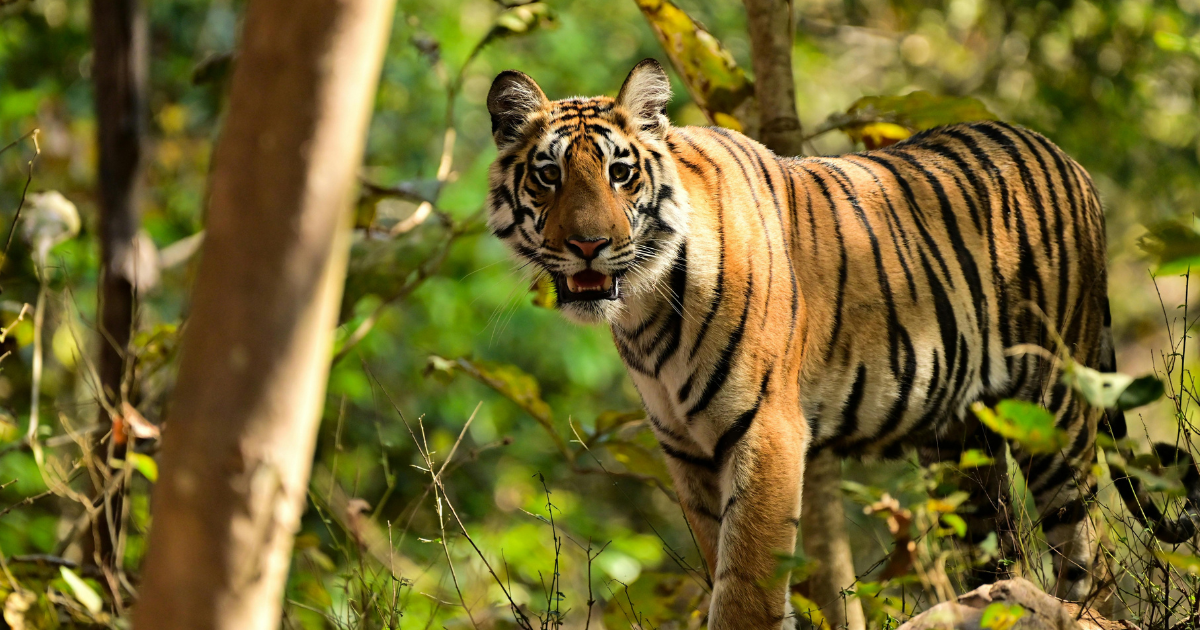
Project Tiger, launched in 1973, now oversees more than 50 reserves across 20 states.
Asiatic lion
The Asiatic lion has one of the most remarkable conservation histories of any large mammal in India. Once found across a vast range stretching from the Mediterranean to eastern India, the species was hunted to the edge of extinction by the early 20th century, with as few as 20 individuals surviving in a single forest in western Gujarat. A century of protection has brought the population back to 891 lions, recorded in the 2025 census, all of them descended from that small remnant group.
Every wild Asiatic lion in the world today lives in and around Gir National Park, a stretch of dry deciduous forest and scrubland in the Saurashtra region of Gujarat. The park covers around 1,400 square kilometres and shares its landscape with the Maldhari, a community of pastoralists who have lived alongside lions for generations. This coexistence is unusual and gives Gir a different feel to most other Indian parks, with cattle camps, temples and small settlements set within and around the protected area.
Lions in Gir are noticeably smaller and lighter in build than their African cousins, with a less pronounced mane and a fold of skin running along the belly. They are typically seen in small prides resting in the shade during the warmer hours of the day. Sightings tend to be calmer and closer than tiger encounters, as lions are social and less elusive, and Gir's relatively open terrain makes them easier to spot from a safari vehicle.
Indian leopard
The Indian leopard is the most widely distributed of the country's big cats, at home in the Himalayan foothills, the forests of the Western Ghats and the rocky hills of Rajasthan. Around 13,000 are thought to live in the wild, making the leopard by far the most numerous of the Big 5. Yet it is also the most elusive. Leopards are smaller and more secretive than tigers, and their adaptability allows them to live close to villages, farms and roads where they are rarely glimpsed.
Two regions stand out for consistent sightings. Jawai in southern Rajasthan is a landscape of granite hills, scattered farmland and small temples, where leopards have shared their territory with the Rabari pastoralist community for generations. The cats shelter in caves within the rock formations and emerge at dawn and dusk, often in clear view from open ground. What makes Jawai unusual is the relationship between the leopards and the people who live there, with very few incidents recorded over decades of coexistence, and the result is one of the most distinctive places in India to watch leopards in the wild.
The Kabini zone of Nagarhole National Park in Karnataka is the second region of note. Set in the Western Ghats and bordered by a seasonal river of the same name, Kabini holds dense tropical forest and a healthy leopard population, including the famous black panther whose appearances have drawn wildlife photographers from around the world. Leopards are also seen regularly in Satpura in Madhya Pradesh and Bera in Rajasthan, and they appear as a secondary species in most of the central Indian tiger reserves.
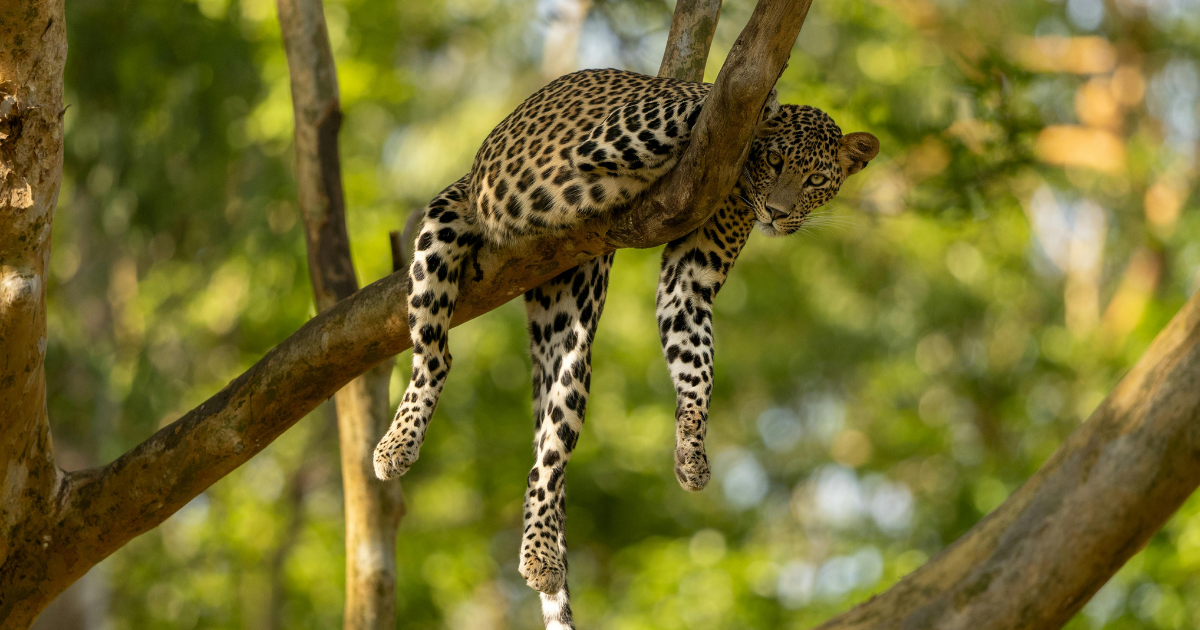
Around 13,000 leopards are thought to live across India, making them the most numerous of the country's big cats.
One-horned rhinoceros
The greater one-horned rhinoceros is among Asia's most distinctive large mammals, recognisable by its single horn and the deep folds in its grey skin. By the early 1900s, hunting had reduced the global population to fewer than 200. A century of protection has since brought the figure to around 4,075, recorded in March 2025, with India holding the great majority.
Around 80% of India's rhinos live in Assam, and the centre of the population is Kaziranga National Park on the southern bank of the Brahmaputra. Kaziranga is a UNESCO World Heritage Site covering 1,300 square kilometres of tall grass, wetlands and semi-evergreen forest, and it holds approximately 2,613 rhinos. The combination of fertile alluvial soil and dedicated protection has produced one of the densest populations of large mammals in Asia, with rhinos sharing the landscape with wild elephants, water buffalo, swamp deer and tigers.
For travellers wanting alternatives, Manas National Park sits in the foothills of the Bhutanese Himalayas and offers a quieter setting, while Pobitora Wildlife Sanctuary near Guwahati holds the highest density of rhinos in the world. Across the border in West Bengal, Jaldapara National Park is another dependable option. Sightings in Kaziranga and Pobitora are typically straightforward, with rhinos often visible grazing in open grassland from a safari jeep.
Asian elephant
India holds the largest population of Asian elephants in the world, with around 30,000 animals living across the Western Ghats, the northeast and the Terai belt below the Himalayas. The species has been part of Indian life for thousands of years, with a long presence in religion, royal courts and rural agriculture, and elephants remain a familiar sight in many parts of the country today.
The Western Ghats hold roughly half of India's wild elephants, and the Kabini zone of Nagarhole National Park in Karnataka is the leading destination for sightings. As the surrounding forests dry out in April and May, large herds gather along the Kabini reservoir to drink and bathe, producing some of the most striking elephant sightings on the subcontinent. Bandipur and Mudumalai, both nearby, are part of the same biosphere reserve and offer dependable encounters in a similar landscape of teak and bamboo forest.
In the north, Jim Corbett National Park in Uttarakhand holds a healthy elephant population alongside its tigers, with herds often seen along the Ramganga River. Kaziranga in Assam is best known for its rhinos but also supports around 1,000 elephants in its grasslands and wetlands, and Periyar in Kerala offers a different experience again, with boat safaris on a forested reservoir where elephants regularly come to the water's edge.
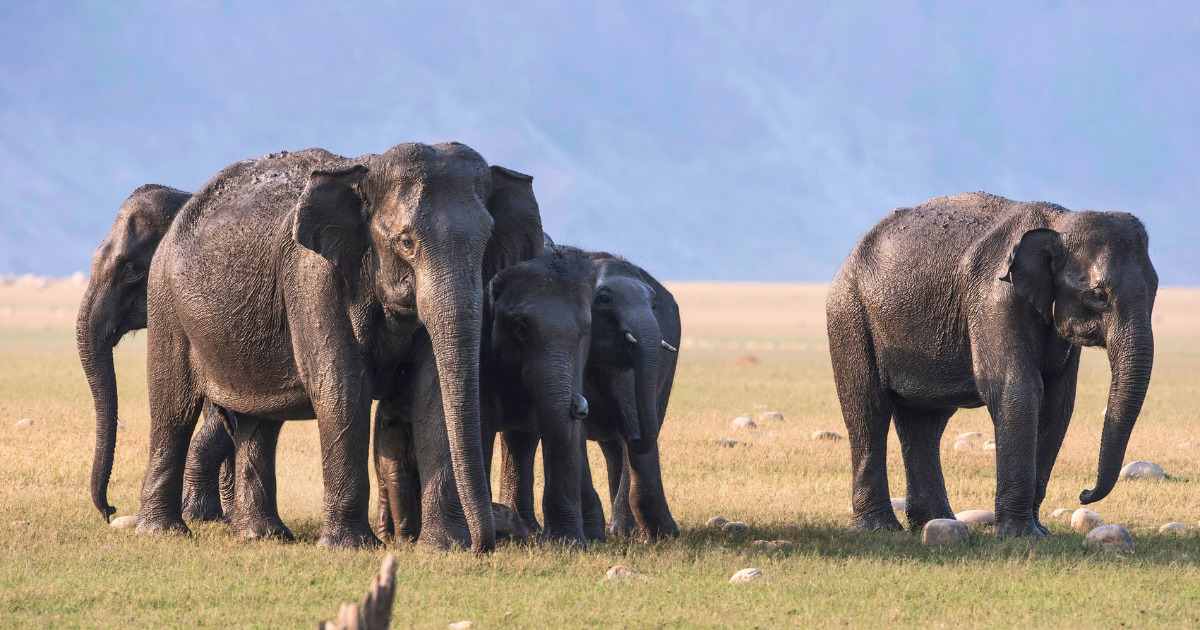
Asian elephant herds are matriarchal, led by the oldest female, with adult males generally moving alone or in small groups.
Where to see the Big 5 in India on a single trip?
Seeing all five species in one journey is achievable, but the geography requires a longer itinerary than most wildlife trips elsewhere in the world. The five animals are spread across at least four states, and a realistic Big 5 journey runs to three weeks at a minimum, with most travellers preferring closer to four.
A typical route begins in central India for tigers, with three to four nights in Bandhavgarh or Kanha producing the strongest results. From there, the journey moves west to Gujarat for the Asiatic lion, with two to three nights at a lodge near Gir National Park. Rajasthan slots in either before or after Gir for the leopards of Jawai, where two nights is usually enough. The final leg flies east to Assam for Kaziranga, where four nights covers both the one-horned rhino and a strong chance of wild Asian elephants in the grasslands.
A shorter version of the journey is possible for travellers who are happy to substitute the Kabini zone of Nagarhole for elephant sightings, since Kabini also offers good leopard encounters and ties the Western Ghats into the itinerary. This route works well for travellers who have less time or who want to combine the wildlife journey with cultural travel through Karnataka and Kerala.
What to know before going on a wildlife safari in India
A wildlife safari in India looks different to a safari in Africa, and a little preparation makes the experience far more rewarding. The parks are managed by state forest departments, sightings are governed by a permit system, and the structure of a typical day shapes the experience as much as the wildlife itself.
How do Indian safari permits and zones work?
Every Indian national park is divided into safari zones, with a fixed number of vehicles allowed into each zone per drive. Permits are issued in advance for a specific zone and a specific drive, and they are not transferable once booked. The system is designed to protect the parks from overcrowding and to give the wildlife genuine space, and helps explain why sightings in well-managed reserves feel unhurried.
Booking is best done several months ahead for the peak months between November and April, and Bandhavgarh and Ranthambore fill quickly. Lodges and travel companies handle permits as part of an itinerary, so most travellers will not need to engage with the system directly. Some parks also offer premium zones with fewer vehicles, and the most popular zones are not always the ones with the best sightings, which is where local knowledge from a good lodge or naturalist makes a real difference.
What to pack for an Indian safari?
Mornings on safari can be cold, particularly in central and northern India between December and February, while afternoons in the same parks often warm into the high twenties. Layers in neutral colours work best, with greens, browns and muted greys preferred over bright shades or white. A wide-brimmed hat, sunglasses and a light scarf for the dust are all useful, along with a pair of binoculars in the 8x42 range, which make a real difference for sightings at distance.
A camera with a longer lens suits travellers for whom photography is part of the appeal, although most find that taking in the moment matters more than the picture. Lodges generally provide blankets and hot water bottles for the early drives, so the priority is comfortable layered clothing rather than heavy winter gear. Closed shoes are sensible for the open jeeps, and a small daypack helps with water, sunscreen and a light snack.
When is the best time of year for a wildlife safari in India?
The main safari season runs from October to April, when the parks are open and the weather is at its most comfortable for travel. November to February is the most popular time to visit when the weather is cooler, with crisp mornings, clear afternoons and pleasant temperatures across central and northern India. March to May is warmer but often has the best sightings, as receding water sources draw animals into the open and the thinning forest cover makes them easier to see.
Most parks close during the monsoon between June and September to allow the wildlife to breed undisturbed, although Kaziranga follows a slightly different calendar of November to April because of seasonal flooding from the Brahmaputra. For travellers prioritising tiger sightings, April and May are the strongest months in central India, while those who prefer cooler weather and broader cultural travel tend to favour the December to February window.
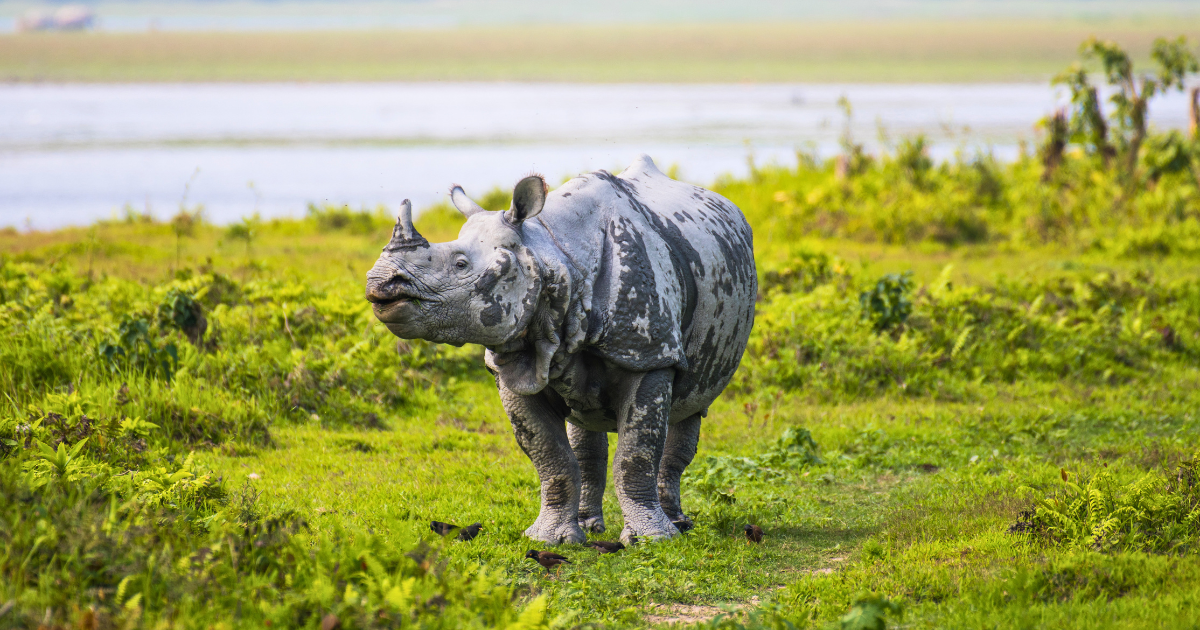
Kaziranga National Park holds approximately 2,613 rhinos, the largest population of the species in the world.
Planning a Big 5 wildlife journey with India Unbound
India Unbound has been designing private journeys across India since 2007, working with expert local naturalists and carefully chosen lodges in each park. Every itinerary is bespoke and shaped around the pace, season and interests of the people travelling. Explore our range of India wildlife tours for itinerary ideas, or contact our team to design a private journey tailored to your interests and travel dates.