
Ladakh sits at the far northern edge of India, a high-altitude region of cold deserts, glacial valleys and Buddhist monasteries closer in character to Tibet than to the Indian plains. For centuries it held a strategic position on the trade routes linking Kashmir, Tibet and Central Asia, with pashm wool, turquoise, silver and salt all passing through its mountain passes.
Leh, the regional capital, grew up as the commercial heart of this network. Caravans rested in its bazaars before continuing across the Karakoram or down into the Kashmir Valley, and many of the materials they once carried are still sold in the same streets today. The trade routes closed in the mid-twentieth century after the borders with Tibet and Pakistan hardened, though the markets carried on.
Pashmina, Tibetan jewellery, Buddhist ritual objects and the apricot-based souvenirs from the surrounding valleys still fill the shopfronts, sold by Ladakhi, Tibetan and Kashmiri traders who have been part of these streets for generations.
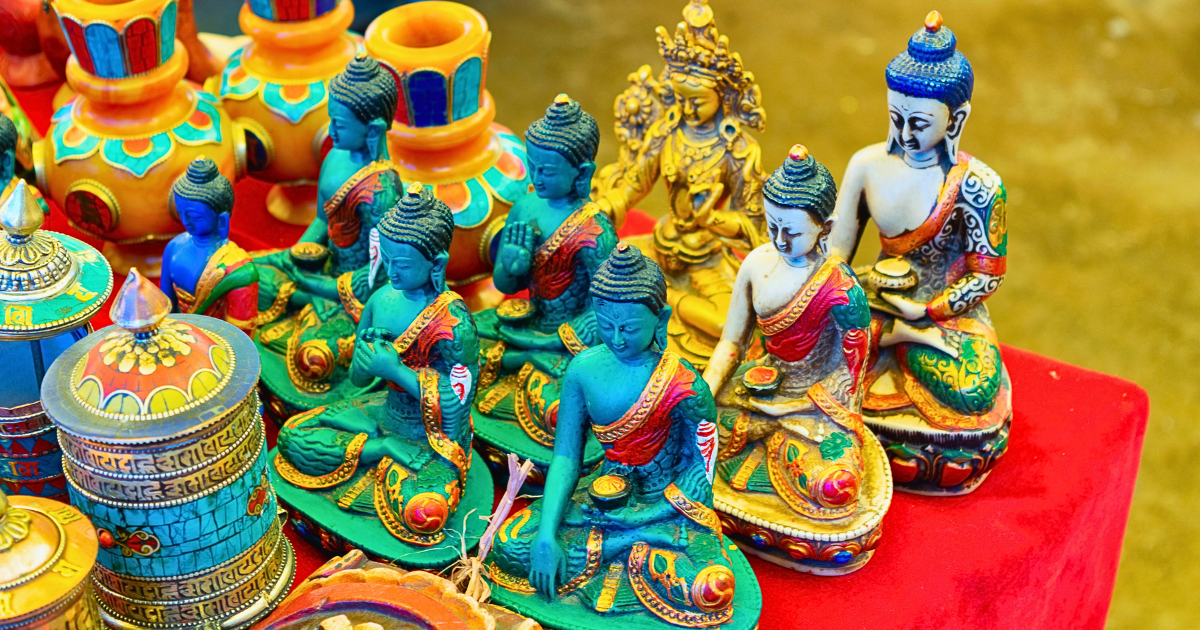
A handful of shops in Leh carry pieces made at monastery-affiliated workshops nearby, which are generally the better buys for travellers who care about authenticity.
What makes shopping in Leh different from the rest of India
Shopping in Leh is closer to the source than almost anywhere else in India. The pashm wool comes from the Changthang plateau a few hundred kilometres east, the Tibetan jewellery is often made by the same families who carried their trade across the border after 1959, and the apricot oil and dried fruit are pressed in villages a day's drive from town. That short supply chain means better prices, fewer middlemen and a clearer sense of where a piece has actually come from.
Three trader communities run the markets, and each tends to specialise. Ladakhi shopkeepers hold most of the older businesses on the Main Bazaar, Tibetan refugees operate the stalls at Moti Market, and Kashmiri merchants control much of the higher-end pashmina and handicraft trade along Changspa Road. Each group sells what its own community produces or has long traded in, so the same shawl or piece of jewellery can vary in price and provenance from one street to the next, which is the main reason it pays to visit more than one market.
What to buy in Leh?
Most travellers come to Leh's markets with pashmina in mind and leave with rather more than that. The four categories below cover almost everything sold across the three main markets, and a quick read through them is the easiest way to decide what is worth your time before you start walking.
Pashmina shawls and woollen textiles
Pashmina is the headline buy, and the wool itself comes from the undercoat of the Changthangi goat raised by Changpa nomads on the plateau east of town. The raw fibre is collected each spring and traditionally sent to Kashmir for weaving and finishing, though a smaller number of shawls are now woven in Ladakh. Heavier woollen pieces sit alongside the pashmina in most shops, including yak wool blankets, sheep wool stoles and the thick robes worn by Ladakhis through winter, all of which tend to be cheaper and more practical than the shawls.
Tibetan jewellery and silverwork
Tibetan jewellery is built around four materials, which are silver, turquoise, coral and dzi beads. The most common pieces are gau prayer boxes worn on a cord around the neck, heavy silver bracelets, turquoise and coral rings, and strings of prayer beads in bone, wood or seed. Older work tends to come through Tibetan refugee families and carries genuine age, while newer pieces are produced by silversmiths in Nepal and Dharamshala and brought up to Leh for the season, which explains most of the price gaps between one stall and the next.
Thangkas, prayer wheels and Buddhist ritual objects
Thangkas are scroll paintings of Buddhist deities and mandalas, traditionally used for meditation and teaching. They range from inexpensive printed reproductions to hand-painted works produced over weeks or months. Prayer wheels, butter lamps, singing bowls and small bronze statues of the Buddha and bodhisattvas fill out the rest of the ritual category, most of them sourced from Nepal and the Tibetan workshops scattered across the Himalaya. A handful of shops in Leh carry pieces made at monastery-affiliated workshops nearby, and these are generally the better buys for travellers who care about authenticity.
Apricot products, pottery and other regional crafts
Ladakhi apricots are well known across northern India, and the markets in Leh sell dried fruit, cooking and skincare oil pressed from the kernels, and apricot scrubs produced by women's cooperatives in Nubra and the Sham Valley. Seabuckthorn juice and jam from the same valleys appears in most shops, along with hand-thrown pottery from villages near Likir and felt slippers, hats and bags made from yak and sheep wool. These are the most affordable souvenirs in town, and many travellers end up clearing space in their luggage for them.
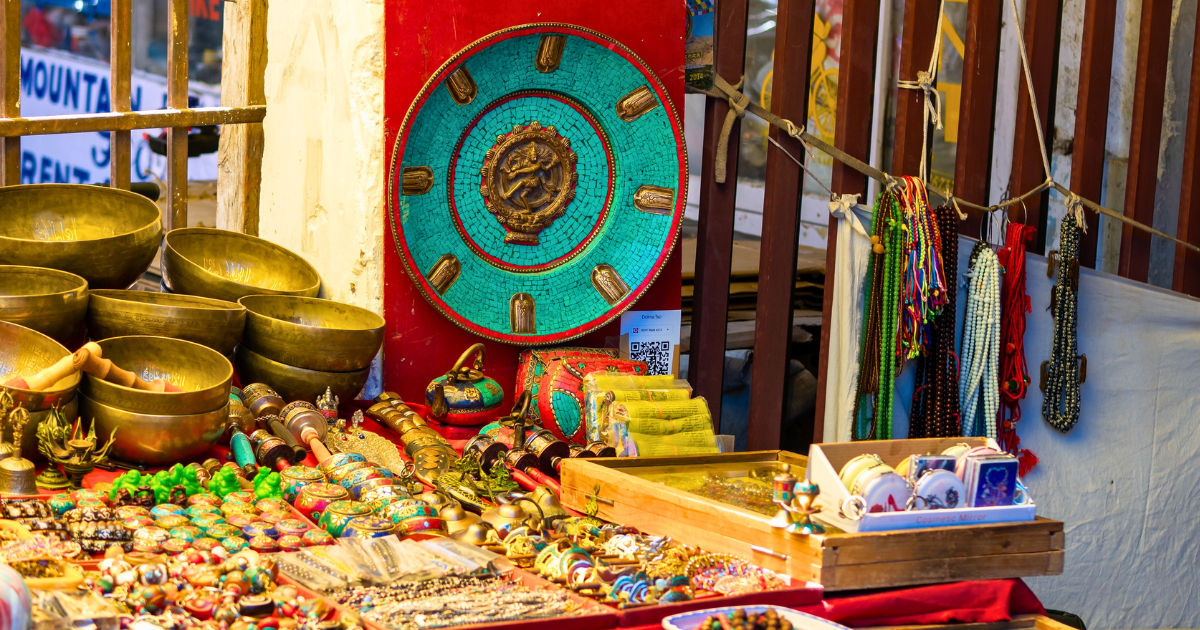
Buddhist ritual objects are one of the four main categories of handicraft sold across Leh's markets.
Where are the best markets in Leh?
All three markets sit within walking distance of each other in the older part of town, and an afternoon is usually enough to cover them properly. The Main Bazaar is the busiest and the most established, Moti Market is the cheapest for jewellery, and the shops along Changspa Road tend to carry the higher-end pashmina and Kashmiri pieces.
Main Bazaar (Old Leh Market)
The Main Bazaar runs along the pedestrianised street directly below Leh Palace and has been the commercial heart of the town for as long as Leh has existed as a trading post. Shops on both sides sell pashmina, Tibetan jewellery, thangkas, brassware and woollen goods, with a row of Ladakhi women selling vegetables and fresh herbs along the centre of the street through the summer.
Most of the businesses here are Ladakhi-run and have been in the same families for two or three generations, which is reflected in the prices: a little higher than Moti Market for jewellery, but generally fair for pashmina and the better thangkas. The bazaar is busiest between 11:00am and 6:00pm, and quieter in the early morning when shopkeepers are still setting up.
Tibetan Refugee Market (Moti Market)
Moti Market sits a short walk from the Main Bazaar, tucked behind the Jama Masjid in a covered lane of stalls run almost entirely by Tibetan refugee families. The focus here is jewellery and small ritual items, including turquoise and coral rings, silver bracelets, dzi beads, prayer wheels, bells and the gau boxes that turn up across most Tibetan markets in India.
Prices are noticeably lower than the Main Bazaar shops, partly because overheads are lower and partly because the stallholders are dealing more directly with the families and workshops producing the pieces. The market closes earlier than the Main Bazaar, generally winding down by 6:00pm, and many of the stallholders take Sunday off.
Changspa Road and the lanes around Old Town
Changspa Road runs west of the centre through the area where most of Leh's guesthouses and cafes are clustered, and the shops along it cater to travellers staying in that part of town. The mix is different from the older bazaars, with more Kashmiri-run boutiques selling higher-grade pashmina, papier-mache, walnut wood carving and the kind of curated handicraft stock that travels well.
Prices are higher than either the Main Bazaar or Moti Market, though the quality of the pashmina and the Kashmiri pieces is generally a step up, and the shops are quieter and easier to browse. The lanes between Changspa Road and the Old Town hold a smaller number of permanent shops worth knowing about, including a few cooperatives selling Ladakhi-made felt, pottery and apricot products direct from the producers.
When is the best time to visit Leh markets?
The markets are open from late May to early October, in line with the wider tourist season in Ladakh. July and August are the busiest months, with every shop open and the widest range of stock, but prices hold firm and the streets are crowded. June and September are better for most travellers, with the same range of shops open and a little more room to negotiate, particularly in the last weeks of September as the season winds down.
Within the day, the markets are calmest in the mid-morning and busiest in the late afternoon, when travellers return from the monasteries and valleys outside town. The Tibetan stalls at Moti Market begin packing up around 5:30pm, earlier than the Main Bazaar shops, and a number of them close on Sundays.
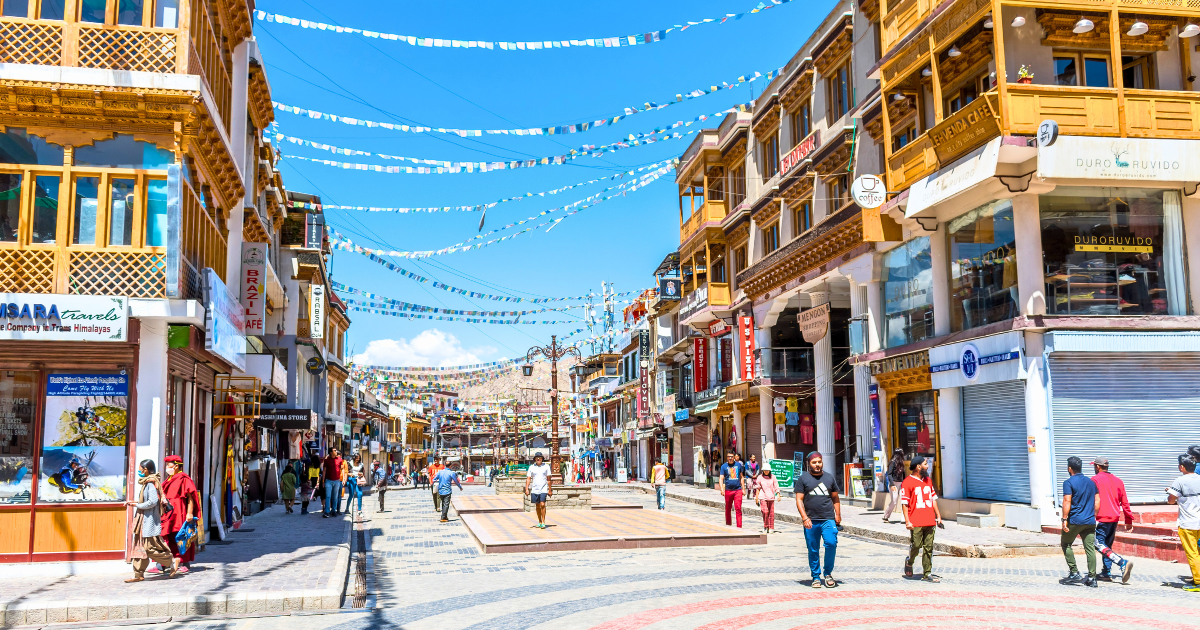
The markets are open from late May to early October, and June and September tend to suit travellers better than the crowded peak months of July and August.
Practical tips before shopping in Leh
Travellers who spend a little time learning what to look for in pashmina and Tibetan jewellery generally come away with better pieces and a clearer sense of what they have bought. Bargaining in Leh is also part of that experience, and some cooperatives offer a more direct route for anyone who would rather buy from the producers themselves.
How to spot genuine pashmina
Hold the shawl up to the light and look for a slightly uneven weave, which is the clearest visual sign of hand-loomed pashmina. Run a thread between the fingers, and a genuine piece will feel soft and almost weightless, while a blend will feel firmer and slightly slick. The burn test is the most reliable check if a shopkeeper agrees to it: a single thread pulled from the fringe should burn to a fine ash that crumbles between the fingers, whereas synthetic blends melt into a hard bead. As a rough price guide, a pure pashmina shawl in Leh starts around AUD 150 to AUD 200, and anything well below that is almost certainly blended.
Recognising authentic Tibetan jewellery
Genuine silver feels heavier than its size suggests and carries a small stamp on the back of the piece indicating its purity. Real turquoise has a fine matrix of dark veins running through the stone, while resin or dyed howlite imitations look uniform and slightly plastic when examined closely. Coral should show small natural irregularities and a slightly waxy surface, with bright, perfectly uniform pieces almost always reconstituted or dyed bone. For older pieces, asking the seller where the item came from and how long it has been in the shop usually produces a clearer answer than asking whether it is antique.
Bargaining etiquette in Leh
Bargaining in Leh is more restrained than in markets elsewhere in India, and aggressive haggling tends to shut a conversation down. A reasonable opening counter sits around 15% to 20% below the asking price, with the final price usually settling closer to 10% off. Tibetan stallholders at Moti Market often hold firm because their margins are already slim, and pushing too hard is considered impolite. Ladakhi and Kashmiri shopkeepers on the Main Bazaar and Changspa Road have more room to move, particularly on larger purchases or when buying several pieces at once.
Supporting cooperatives and women-run craft collectives
Several cooperatives sell directly through small shops in the markets and along Changspa Road, and they are usually the most reliable places to buy when provenance matters. The Ladakh Nuns Association runs a shop near the Main Bazaar, the Lena Ladakh Pashmina cooperative weaves and finishes shawls in Ladakh rather than sending the wool down to Kashmir, and the Tsemo Heritage Society works with traditional craftspeople around the Old Town. A larger share of the price stays with the producers in each case, and the staff can usually explain how a piece was made and where it came from in considerably more detail than a general shop.
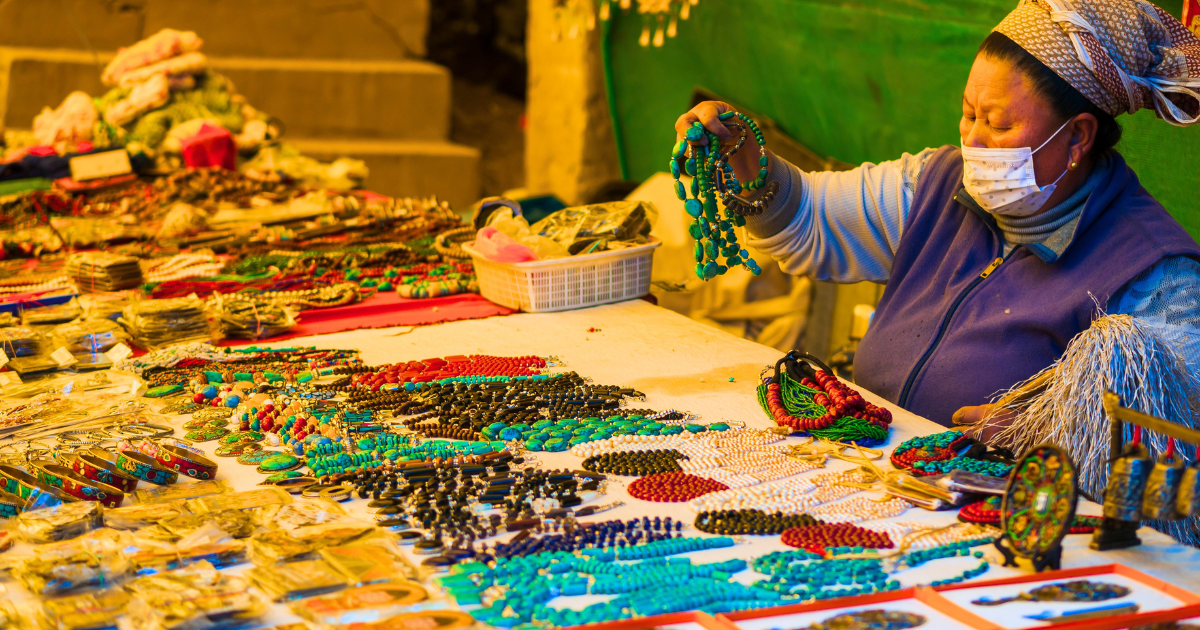
Many of the families running stalls at Moti Market came to Ladakh after 1959 and have passed the jewellery trade down two or three generations.
Exploring Ladakh with India Unbound
India Unbound has been designing private journeys through India since 2007, with Ladakh among the destinations the team knows in the most depth. A custom made itinerary through the region typically combines time in Leh for the markets and the older town with visits to the surrounding monasteries at Thiksey, Hemis and Alchi, drives into Nubra over the Khardung La pass, and time in the villages of the Sham Valley where many of the cooperatives mentioned in this article are based.
Itineraries are built entirely around the interests and pace of each guest, with private guides, carefully chosen accommodation and enough time to explore the markets properly rather than fitting them around a tighter schedule. To start planning a journey through Ladakh, get in touch with the India Unbound team or browse the current Ladakh itineraries on the website.