
Where To Go For Meditation And Yoga In India
India has been the home of yoga and meditation for more than two thousand years. The practices grew out of Vedic philosophy, the Upanishads and the early Hindu and Buddhist monastic traditions, and were refined over centuries in ashrams along the Ganges, in Himalayan retreats and in the great learning centres of the south.
Much of that tradition remains intact today. Particular towns, rivers and teaching lineages are still at the centre of practice in India, and travellers who come to study or observe yoga generally move through the same regions practitioners have for generations. That continuity is a large part of what sets spiritual travel in India apart from wellness tourism elsewhere, as the teaching has stayed close to the places it came from.
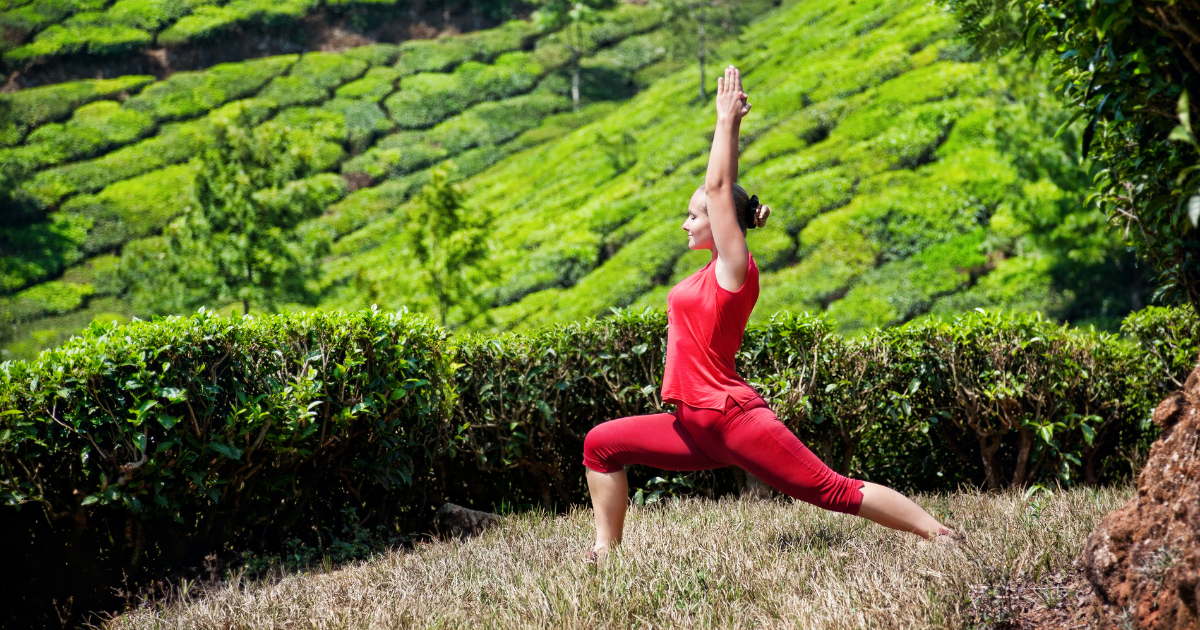
Yoga in India is still taught in the regions and lineages where it first developed.
What is the history of yoga in India?
The earliest references to yoga appear in the Vedas, composed over a long period and codified roughly three thousand years ago, where the word is used in the sense of yoking or disciplining the self. The Vedas describe contemplative practice and breath control among the ascetic communities living at the edges of mainstream society, though not yet a developed system. The philosophical groundwork came in the Upanishads from around the 8th century BCE, which set out the relationship between the individual self and a universal consciousness that meditation aimed to realise.
Meditation grew out of the same body of thought, and Hindu dhyana and Buddhist vipassana both trace their roots to this period. The two traditions influenced each other for centuries through shared monastic networks across northern India, with the Buddha himself studying under Hindu teachers before developing his own path. Meditation centres on both sides of the tradition took shape in the same regions, along the Ganges plain and the foothills of the Himalayas.
The Yoga Sutras and the eight limbs
For several centuries after the Upanishads, yoga continued to grow through oral teaching and monastic practice, with different schools developing their own approaches across northern India. The tradition found its most lasting written form in the Yoga Sutras of the sage Patanjali, dated somewhere between the 2nd century BCE and the 4th century CE, which drew these threads together into a single structured system. Patanjali set out the eight limbs of yoga, covering ethical observances, physical postures, breath control and stages of meditation that lead to deeper states of awareness.
Physical posture, or asana, is only one of these eight, and for much of yoga's history it received less attention than the other limbs. The emphasis was on mental discipline and philosophical study, with the physical practice supporting the longer goal of meditation. By the time of the Bhagavad Gita, composed between the 5th and 2nd centuries BCE, yoga had taken on a broader meaning still, encompassing devotion, action and knowledge alongside contemplative practice.
The modern revival and the lineages travellers meet today
For most of its history, yoga was a practice confined to monasteries, ashrams and small circles of dedicated students. It was not widely taught to the general public in India, let alone internationally. That began to shift in the late 19th century when Swami Vivekananda brought yoga philosophy to wider audiences in India and the West, presenting it as a serious intellectual and spiritual tradition with relevance well beyond the ashram.
The physical practice as it is known today took shape a generation later, in the courtyards of the Mysore Palace, where Tirumalai Krishnamacharya began teaching in the 1930s under the patronage of the Maharaja. Krishnamacharya placed greater emphasis on asana and breath than earlier teachers had, and in doing so created the foundation for much of what modern yoga has become.
Krishnamacharya trained the teachers who would go on to shape almost every major school of yoga practised today. B.K.S. Iyengar took his teaching to Pune and developed the alignment-based approach now taught around the world. K. Pattabhi Jois stayed in Mysore and formalised the dynamic Ashtanga vinyasa system. T.K.V. Desikachar, Krishnamacharya's son, continued his father's individualised approach in Chennai. As international interest in yoga grew through the second half of the 20th century, these lineages became the main draw for travellers coming to India to study, and each remains active in the city where it was founded.
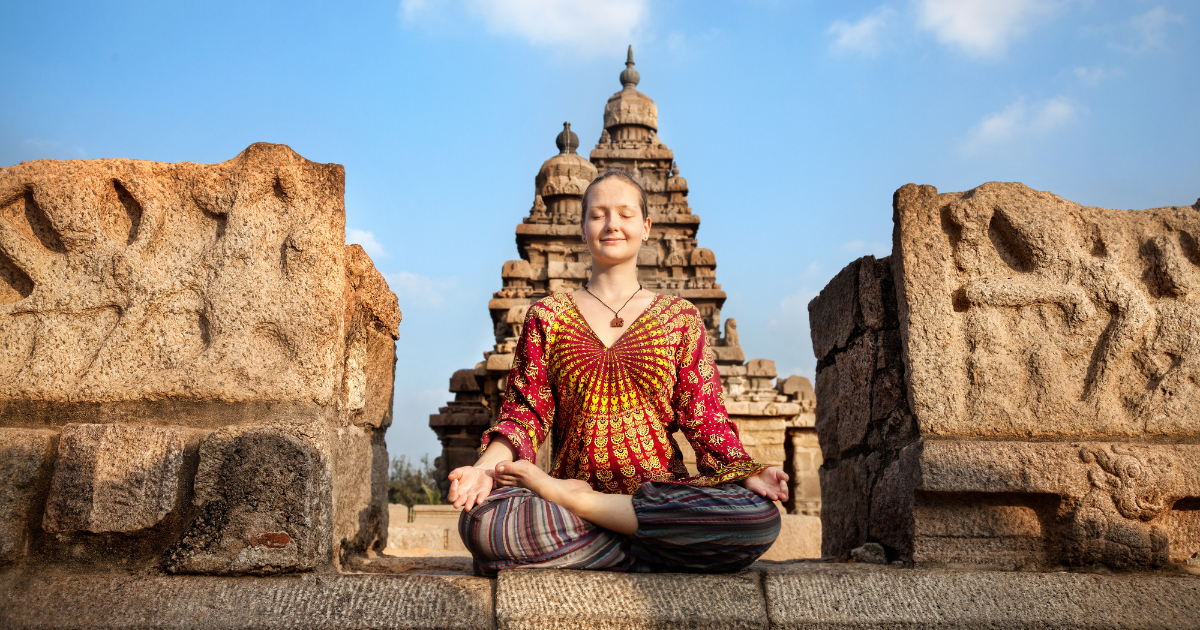
The philosophical roots of yoga in India stretch back more than two thousand years.
Where is the best place for yoga in India?
India has several long-established centres for yoga, each tied to a specific tradition and shaped by the landscape and culture around it. There are six places in particular that cover the main regions practitioners travel to, and together account for most serious yoga and meditation travel in the country.
Rishikesh and the Himalayan Foothills
Rishikesh sits on the Ganges where the river leaves the Himalayas and begins its course across the northern plains. The town has drawn sadhus, yogis and Hindu pilgrims for centuries, well before yoga had any international following, and is the closest thing India has to a recognised capital of practice. The combination of the river, the surrounding forest and the foothills rising behind it gives the town a setting that has shaped its reputation as much as any single school or teacher.
Most of the ashrams and yoga schools are concentrated around the suspension bridges of Lakshman Jhula and Ram Jhula, with Parmarth Niketan, Sivananda Ashram and the Yoga Niketan among the better known. Rishikesh yoga ranges from short drop-in classes at riverside schools through to month-long teacher training programmes, and the town hosts the International Yoga Festival each March. Travellers who come here generally combine practice with the evening Ganga aarti at Triveni Ghat and walk into the surrounding hills, often continuing on to Haridwar, Devprayag or the higher reaches of Uttarakhand.
Mysore in Karnataka
Mysore is the home of Ashtanga yoga and the lineage that runs from Krishnamacharya through his student K. Pattabhi Jois. Pattabhi Jois taught from the Ashtanga Yoga Research Institute in the Gokulam neighbourhood for several decades, and the institute is now run by his grandson Sharath Jois under the name Sharath Yoga Centre. Practitioners come to Mysore for the traditional Mysore-style practice, which is self-led, taught one-to-one and built on a fixed sequence of postures.
Stays here tend to be longer than at other yoga destinations, with one to three months common among serious students. The city itself is a former royal capital with its own draw beyond the yoga community, including the Mysore Palace, the markets of Devaraja and the surrounding region of southern Karnataka.
Kerala and the Ayurvedic tradition
Kerala is the centre of Ayurvedic medicine in India, and yoga in the state is generally taught alongside Ayurvedic treatment rather than on its own. The two systems share a philosophical background and a focus on the relationship between body, breath and mind, which is why they have long been practised together. Travellers come to Kerala for longer wellness stays, often built around a course of Panchakarma treatment lasting two to four weeks.
The main retreat centres are spread along the coast and through the backwaters, with Kovalam, Varkala and the area around Kochi housing most of the established properties. Inland, the foothills of the Western Ghats around Wayanad and Munnar offer a cooler climate and quieter setting for travellers wanting to combine practice with time in the tea and spice country. The traditional season for Ayurvedic treatment is the monsoon, from June to August, when the body is considered most receptive to the therapies.
Dharamshala and Tibetan Buddhism
Dharamshala in Himachal Pradesh has been the seat of the Tibetan government in exile and the home of the 14th Dalai Lama since 1960. The town, and particularly the upper settlement of McLeod Ganj, has grown into one of the main centres of Tibetan Buddhist study and meditation outside Tibet itself. Practice here draws on the Tibetan Buddhist tradition, which gives it a different character to the Hindu yoga lineages further south, with greater focus on meditation, philosophy and Buddhist study alongside asana.
The Tushita Meditation Centre above McLeod Ganj runs introductory and advanced courses, and the Library of Tibetan Works and Archives offers regular philosophy classes open to visitors. Many travellers combine time in Dharamshala with visits to the monasteries at Norbulingka and Gyuto, or with walks into the Dhauladhar range that rises behind the town.
Bodh Gaya, Sarnath and the Buddhist Circuit
Bodh Gaya in Bihar is the site of the Buddha's enlightenment, marked by the Mahabodhi Temple and the descendant of the original Bodhi tree. Together with Sarnath in Uttar Pradesh, where the Buddha gave his first teaching, and Kushinagar, where he died, it forms the core of the Buddhist pilgrimage circuit. The region draws practitioners from across the Buddhist world, and the meditation centres here reflect that international following.
The most established practice in this region is vipassana, the silent insight meditation taught in the tradition of S.N. Goenka. The Dhamma Bodhi centre in Bodh Gaya runs the standard ten-day silent course, and similar centres operate in Sarnath. Outside the courses, the temples surrounding the Mahabodhi complex are run by different national Buddhist communities, including the Thai, Bhutanese, Japanese and Tibetan monasteries, and each has its own approach to practice that visitors can observe.
Pune and the Iyengar lineage
Pune in Maharashtra is the home of the Iyengar lineage and the Ramamani Iyengar Memorial Yoga Institute, founded by B.K.S. Iyengar in 1975 and named after his late wife. Iyengar yoga is characterised by precise alignment, the use of props such as belts, blocks and bolsters, and an emphasis on therapeutic application, which draws practitioners interested in the structural side of asana and in yoga as a therapeutic discipline.
Study in Pune is more formal than at most other yoga destinations, with the institute requiring prior experience and operating on a structured timetable. Classes are taught by senior teachers from the Iyengar family and longstanding faculty, and Pune itself is a university city with a strong intellectual character that suits the analytical approach the lineage is known for.
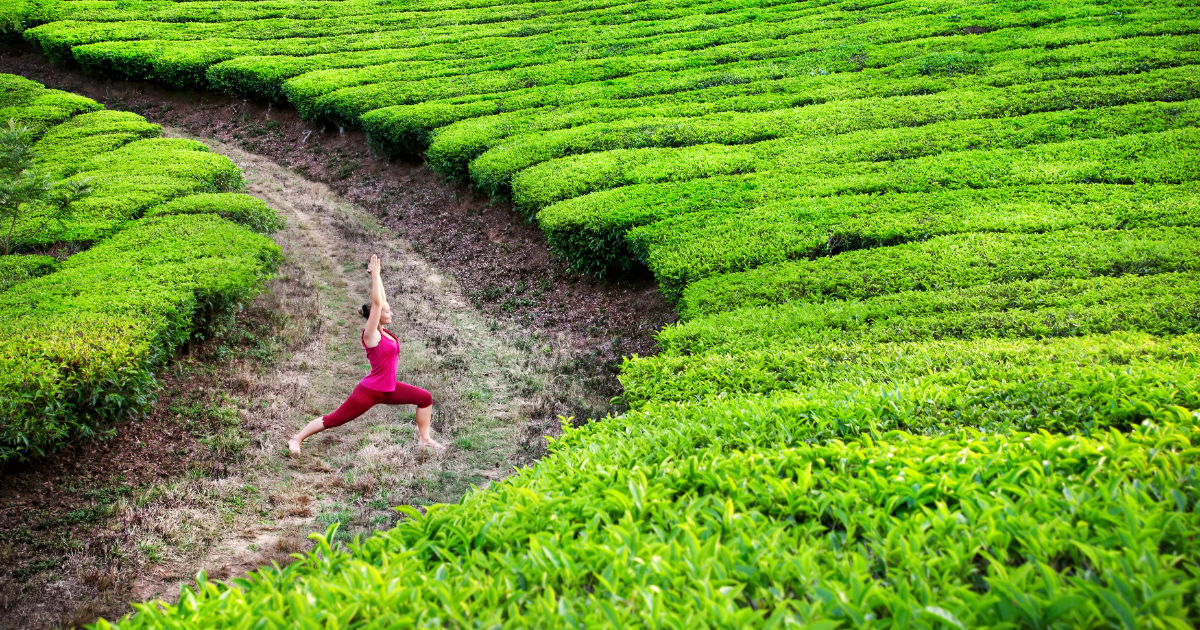
India has several long-established centres for yoga, each tied to a specific tradition and region.
What kinds of yoga retreats are available in India?
Yoga retreats in India have grown out of a long tradition of structured practice, with the format of a stay often reflecting the lineage or institution behind it. An ashram run by a swami, a boutique centre run by an independent teacher and a wellness resort with an in-house medical team each offer a different way into the same body of knowledge.
Traditional ashram stays
Ashrams are the oldest form of yoga accommodation in India and the closest to the original monastic setting in which the practice developed. Daily life follows a set schedule that usually begins before dawn with meditation and pranayama, moving into asana practice, vegetarian meals, philosophy lectures and time for personal study. Rooms are simple and often shared, and guests are encouraged to take part in the programme as a way of getting the most from the experience.
Many of the established ashrams are in Rishikesh, with others spread across the north and the south of the country. Stays are typically a week or longer, and the teaching is usually delivered by resident swamis and long-term teachers working in the lineage of the ashram's founder. This continuity is part of what gives an ashram its depth, as the same approach has often been taught at the same place for several generations.
Boutique retreat centres
Boutique retreats combine yoga and meditation with a higher standard of accommodation, food and setting, while keeping the practice at the centre of the stay. They are often run by experienced teachers or families with long ties to a region, in properties chosen for their location and character. Daily schedules tend to be lighter than at an ashram, with one or two practice sessions a day and time in between for rest, reading or exploring the surrounding area.
Centres in this category are found in Kerala, Goa, the foothills of the Himalayas around Rishikesh and Dharamshala, and in pockets of Karnataka and Tamil Nadu. The lineage and style of practice vary widely between properties, and the character of each centre tends to reflect the teacher who runs it. Travellers looking for a particular style of yoga can usually find a retreat that specialises in it.
Wellness resorts with structured programmes
Wellness resorts offer longer stays built around personal consultation, Ayurvedic treatment and structured daily practice. The best known are Ananda in the Himalayas above Rishikesh, Vana in Dehradun and Shreyas near Bangalore. Each has a medical team that meets guests on arrival and designs a programme around their needs, with yoga, meditation and Ayurvedic therapies built into the daily schedule.
Stays are usually seven nights or longer, with some guests staying two to three weeks for a fuller course of treatment. These resorts sit closer to the medical and therapeutic end of the spectrum, though the better properties draw on the same body of knowledge as the older institutions and work with experienced teachers and Ayurvedic doctors. Accommodation, food and service are at the level of a high-end hotel, which makes the format a comfortable introduction to Indian wellness traditions for travellers new to the country.
Silent meditation retreats
Silent meditation retreats are a category of their own and tend to draw a different kind of traveller. The most widely available are the ten-day vipassana courses run by the Goenka organisation, which operate at centres across India, among them Igatpuri in Maharashtra, Jaipur in Rajasthan and Bodh Gaya in Bihar. Courses are taught in the tradition of S.N. Goenka, who reintroduced vipassana to India after studying with U Ba Khin in Burma, and follows a set schedule of meditation, instruction and silence.
The courses are free to attend, with accommodation and meals provided, and donations are accepted at the end of the stay from those who have completed the course and wish to support future students. The schedule is intensive, with around ten hours of meditation a day and no reading, writing, talking or contact with the outside world for the duration of the course. For travellers who want serious meditation instruction in a properly supported setting, vipassana courses are among the most established options in the country.
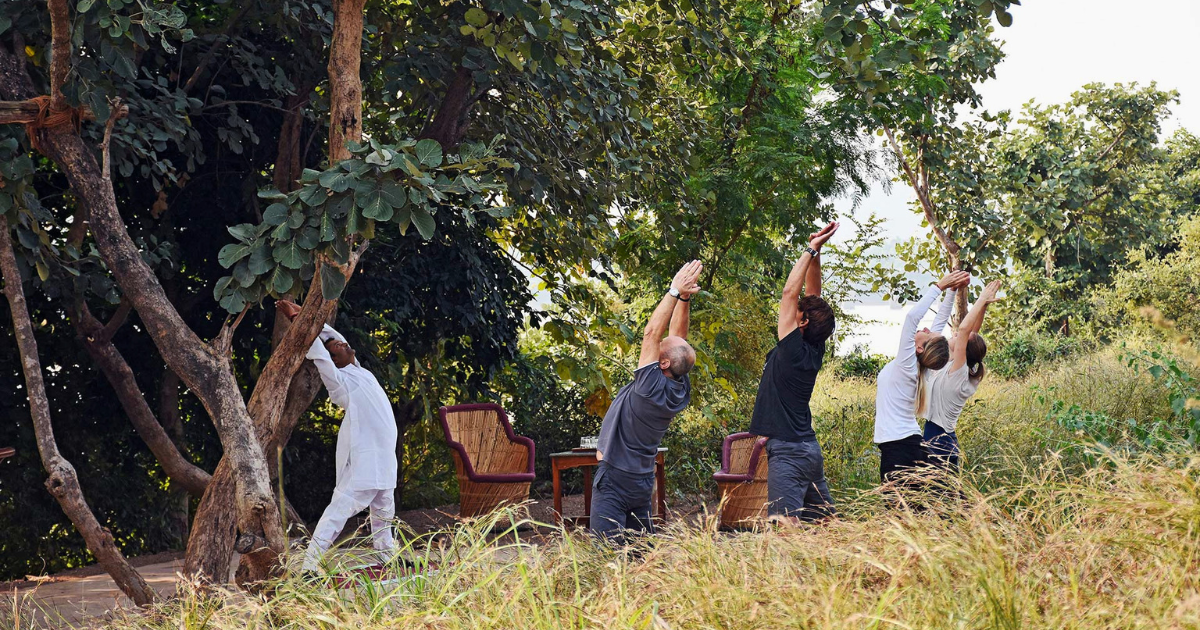
Retreat formats in India range from traditional ashram stays to structured wellness programmes.
How to choose a yoga retreat in India
Choosing the right retreat in India is largely a question of knowing what kind of experience will be the most rewarding. The style of practice, the location and climate, and the amount of time available all shape the experience in different ways, and a good combination of the three can turn a retreat into one of the most meaningful parts of a trip.
Match the style of practice to experience level
The style of yoga being taught is usually the best place to start. A traveller with a background in Ashtanga will get the most from a stay in Mysore, where the practice is taught in its original setting and at its own pace. Someone drawn to alignment and therapeutic work will find a natural home in Pune.
First-time practitioners with less preference often do well in Rishikesh, where the range of schools and approaches is wide enough to allow some exploration in the first few days. Having a sense of the preferred style before booking helps, as each centre and lineage teaches differently and a good match between teacher and student makes all the difference to what the stay gives back.
Consider location, climate and timing
Location and climate are worth thinking about early in the planning. North India is at its best for practice between October and March, when the heat has lifted and the mornings are cool. Kerala's dry season runs from November through to March, and the monsoon months of June to August are the traditional time for Ayurvedic treatment, when the cooler air and higher humidity are considered ideal for the therapies.
The hill stations of Dharamshala and the Kumaon Hills in Uttarakhand come into their own in summer, offering a comfortable climate when the plains are at their hottest. Travellers who want to combine a retreat with a wider journey through India can plan around the region they are visiting, as a well-placed stay at the beginning or end of a trip can set a good rhythm for the rest of it.
Length of stay and depth of practice
How long to stay is partly a practical question and partly about what kind of depth the traveller hopes to find. A week is enough to settle into a routine and get a feel for a particular teacher or centre. Two weeks gives the practice time to deepen and the body time to adjust, especially with Ayurvedic programmes that work best over a longer course.
Stays of a month or longer, which are common in Mysore and at some of the Rishikesh ashrams, give travellers the chance to commit to a course of study and build a real relationship with a teacher. The Goenka vipassana courses are fixed at ten days, with the full duration part of the commitment from the outset.
When is the best time to visit India for yoga and meditation?
October to March is the most comfortable window across most of the country. Temperatures in the north have dropped, the monsoon has passed, and ashrams, retreat centres and teacher training programmes are running their fullest schedules. Rishikesh, Mysore, Pune, Bodh Gaya and most of the Kerala coast are all at their most accessible during these months.
From April to June the plains become too hot for sustained practice, and travellers tend to look to the Indian hill stations instead. Dharamshala, McLeod Ganj and the Kumaon Hills in Uttarakhand all stay comfortable until the monsoon arrives in late June, and each has enough teaching and retreat activity to make a summer stay worthwhile.
The monsoon itself brings a different opportunity in Kerala, where the months from June to August are the traditional season for Panchakarma and Ayurvedic treatment. Known locally as the Karkidaka season, this is when the humid conditions are considered ideal for the body to respond to the therapies, and several of the established wellness properties design specific programmes around it.
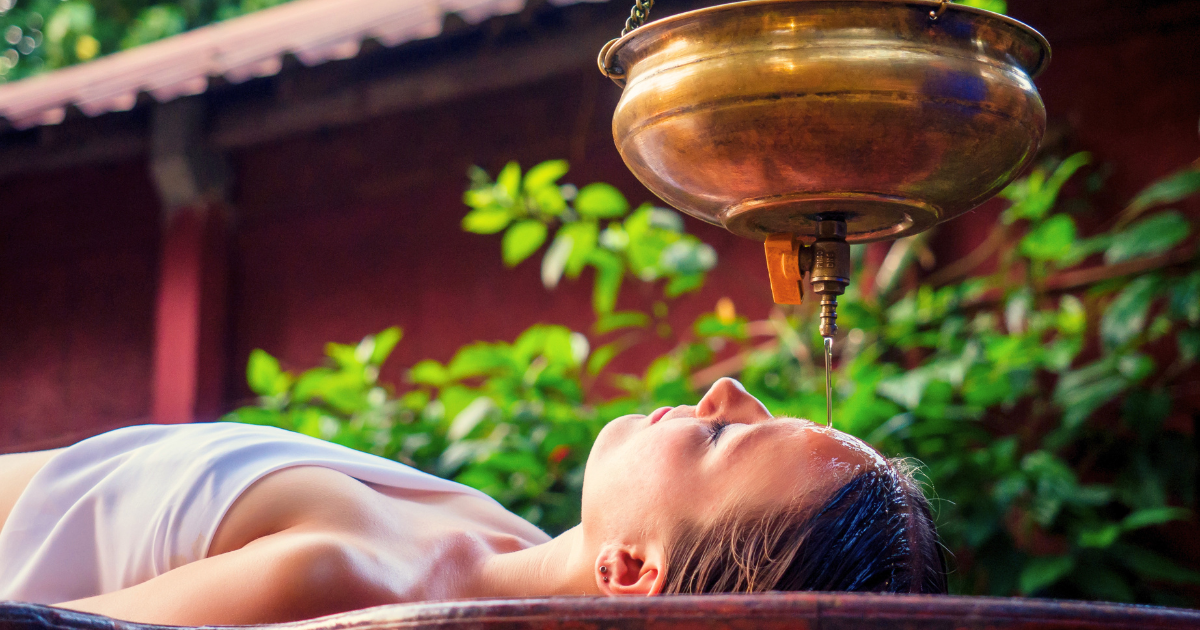
Ayurvedic treatments such as Shirodhara are often combined with yoga during longer stays in Kerala.
Planning a yoga journey with India Unbound
India is one of the few countries where yoga and meditation can be studied in the places and lineages where they first developed. A well-planned journey makes the most of that, matching the right region, centre and style of practice to the traveller and building it into a wider itinerary through the country.
India Unbound has been designing private journeys across India since 2007, with deep knowledge of the country's yoga, meditation and Ayurvedic traditions. The team works closely with travellers to build itineraries that bring the right retreats, teachers and regions together into a journey that fits. Contact us to start planning.