
Chettinad lies in south of Tamil Nadu, where Karaikudi and the surrounding towns and villages are home to the grand courtyard houses of the Nagarathar merchant community. Food is an equally important part of the region’s identity. Its kitchens have given Chettinad cuisine a reputation for peppery meat dishes, fragrant spice blends and meals with a generous variety of accompaniments.
Chettinad chicken is perhaps its most familiar dish, but the regional table also includes vegetable preparations, delicate rice and lentil paniyaram, and sweets made with black rice. Across these dishes, flavour comes from the ingredients used and how they are prepared, including roasting and grinding spices. These choices give Chettinad cooking its range, with each preparation revealing a different expression of the region’s bold flavours.

Nagarathar merchant families built Chettinad’s elaborate mansions, where meals remain part of family gatherings and hospitality.
What gives Chettinad cuisine its character?
Chettinad cuisine takes much of its character from the household cooking of the Nagarathar community, where cooks prepare a masala, a spice mixture ground into a powder or paste, to suit each dish. Roasting the spices before grinding develops their fragrance, which carries through the food as it cooks. In a curry, the masala flavours the gravy, while in a dry preparation such as mutton chukka, it reduces with the cooking juices until the seasoning clings to the meat.
Alongside these methods, the ingredients available to household cooks helped shape the cuisine. Nagarathar trading and banking networks extended into Burma, now Myanmar, and other parts of South East Asia, bringing foods such as black rice back to Chettinad. Local cooks adopted it for kavuni arisi, a sweet made by cooking the rice until soft and combining it with sugar and coconut.
The sweetness of kavuni arisi and the concentrated seasoning of mutton chukka show how widely flavours vary within Chettinad cooking. Cooks adjust their ingredients and methods to give each preparation its character, even though strongly spiced meat dishes have become its best-known expression. Their reputation for heat can overshadow the variety found across the regional table.
Why is Chettinad food spicy?
Much of the heat in Chettinad food comes from dried red chillies and black pepper, used in different proportions according to the dish. Chillies give a curry a more direct burn, while pepper adds a pungent warmth that is particularly noticeable in pepper chicken. Together, they give Chettinad cooking its characteristic heat, although the intensity varies between recipes and households.
Heat also needs to be understood in the context of a meal. A peppery meat preparation is usually eaten with rice and other accompaniments, so its seasoning forms only one part of each mouthful. Vegetable dishes may be more gently spiced, giving a full Chettinad meal a wider range of flavours than its fiery reputation suggests.
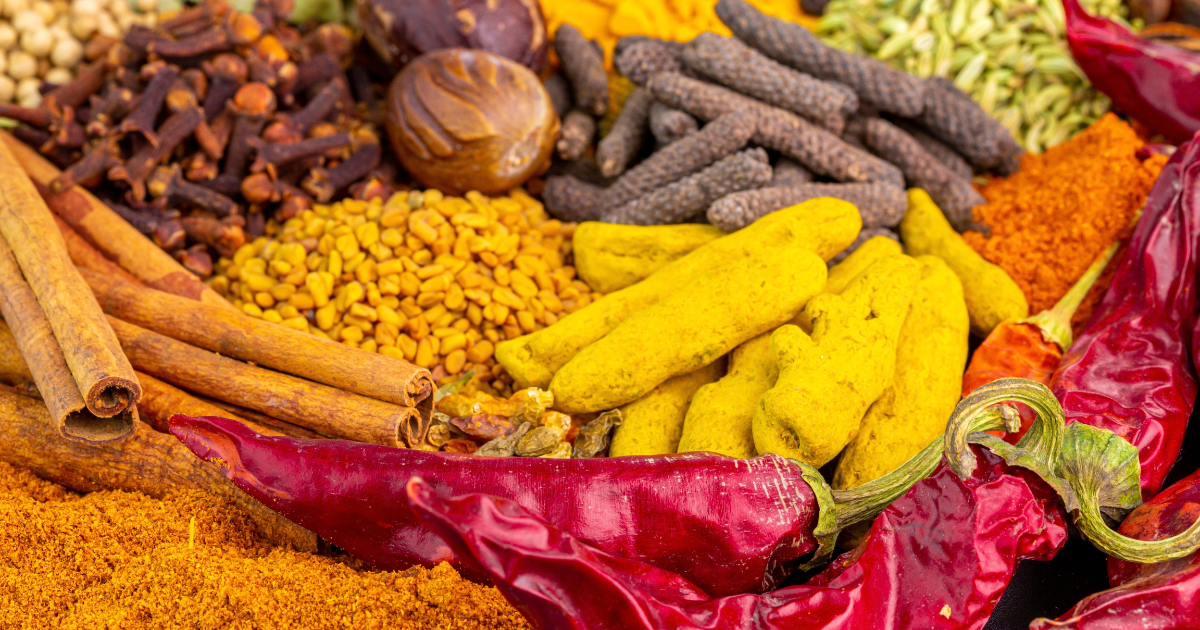
Roasting and grinding spices brings out the fragrance that gives many Chettinad dishes their character.
Which spices give Chettinad cuisine its characteristic flavour?
Kalpasi and marathi mokku contribute some of the earthy, pungent notes associated with Chettinad cuisine, while more familiar spices such as coriander and cinnamon give its masalas depth and fragrance. These ingredients are used elsewhere in Indian cooking too. In Chettinad kitchens, their combinations vary with the dish and the household recipe, giving a dry meat preparation a different flavour from a gravy or biryani.
Kalpasi and marathi mokku
Kalpasi, also called stone flower, is an edible lichen with a light, papery texture and grey-black colouring. Its earthy aroma becomes more noticeable during cooking, adding depth to gravies such as Chettinad chicken. A small piece is enough to flavour the masala without overwhelming the other ingredients.
Marathi mokku consists of dried flower buds with a woody appearance and a pungent fragrance. Used in some mutton curries and biryanis, the buds release their aroma into the cooking liquid alongside the other whole spices. The flavour carries through the gravy or into the rice as it absorbs the liquid.
Fennel, coriander and cumin
Coriander seeds have a gently citrusy flavour, while cumin brings an earthier warmth. Ground into a masala, they form part of the seasoning for meat curries, balancing the sharper notes of pepper and chilli. Roasting the seeds before grinding develops a fuller, toasted flavour.
Fennel adds a sweeter fragrance and works well in dry preparations such as mutton chukka, where the seasoning cooks down to coat the meat. The seeds may be ground into the masala or added whole to hot oil at the start. In a coconut-based vegetable kurma, fennel adds a sweet note to a milder sauce.
Star anise, cinnamon and cloves
Star anise has a strong liquorice-like flavour, so only a small amount is needed in a spice blend. Cinnamon is softer and woody, with a sweetness that complements the more assertive star anise. Both can season Chettinad-style biryanis, flavouring the rice as it cooks with the meat and spiced liquid.
Cloves bring a sharper pungency to this combination and are also used with cinnamon in meat gravies. Added whole to hot oil before the onions, they flavour the base in which the remaining ingredients cook. Their warmth then carries through the sauce as it simmers with the ground masala.
What dishes is Chettinad cuisine known for?
Chettinad chicken and mutton chukka are among the region’s familiar meat dishes, with freshly ground spices giving each a different flavour and texture. The local repertoire also includes sour vegetable mandi, soft vellai paniyaram, a soft rice and lentil fritter, served with chilli chutney, and kavuni arisi, a dark rice sweet prepared for celebrations.
Chettinad chicken
Chettinad chicken is a spiced chicken dish served with gravy or cooked down to a thick masala. Its seasoning commonly includes black pepper and dried red chillies, with coriander, cumin and fennel contributing to the spice blend. Shallots and garlic form the base, while some recipes include kalpasi for its earthy aroma.
To prepare it, cooks soften shallots in oil with whole spices and curry leaves, then stir in the ground masala. The chicken simmers in this base until tender, releasing its juices into the sauce. Some versions retain enough gravy to mix through rice, while others spend longer over the heat until the masala coats the pieces.
Mutton chukka
Mutton chukka is a dry meat dish with tender pieces coated in a concentrated onion and spice masala. Small onions give the coating much of its body, while fennel and dried chillies contribute fragrance and heat. Recipes may also include cinnamon and cloves, depending on the household’s preferred seasoning.
The preparation involves two stages, beginning with cooking the meat in liquid until tender, often in a pressure cooker. The meat continues cooking as the liquid evaporates, with regular stirring to keep the thickening masala from catching. This technique produces tender meat with a strongly seasoned coating, usually served alongside rice and rasam, a thin, spiced broth.
Vegetable mandi
Vegetable mandi is a tangy dish of vegetables simmered in the starchy water collected from rinsing rice. Eggplant and okra are common additions, though the selection varies with the season. Shallots and garlic flavour the sauce, while tamarind or dried raw mango gives it sourness.
Cooks sauté the vegetables with the shallots, garlic and green chillies before adding the rice water and tamarind or mango. As everything simmers, the vegetables soften and the starch lightly thickens the sauce. The finished mandi combines sourness with chilli heat and is served alongside rice.
Vellai paniyaram
Vellai paniyaram is a soft rice and lentil fritter made with rice and a smaller quantity of urad dal, or skinned black gram. Cooks soak both ingredients, then grind them into a smooth batter with a little salt and sugar. They pour the batter into hot oil a ladleful at a time, turning each round as it puffs so that both sides cook while remaining pale.
The finished paniyaram has a soft centre and thin edges, with a mild flavour that suits a spicy accompaniment. It is served hot with milagai chutney, a chilli-based accompaniment, into which pieces of the fritter are dipped. This pairing is eaten for breakfast and on festive occasions.
Kavuni arisi
Kavuni arisi is a thick, sticky sweet made with black glutinous rice, sugar and grated coconut. The rice needs several hours of soaking before cooking to soften its firm grains. As it cooks, it turns deep burgundy and becomes tender while retaining a little chew.
Once the rice is soft, cooks stir in sugar and coconut, then simmer the mixture until thick and moist. Ghee adds buttery richness, while a little cardamom lends fragrance to the finished sweet. Families serve kavuni arisi at weddings and other celebrations, where its dark colour makes it easy to recognise among the dishes on the table.
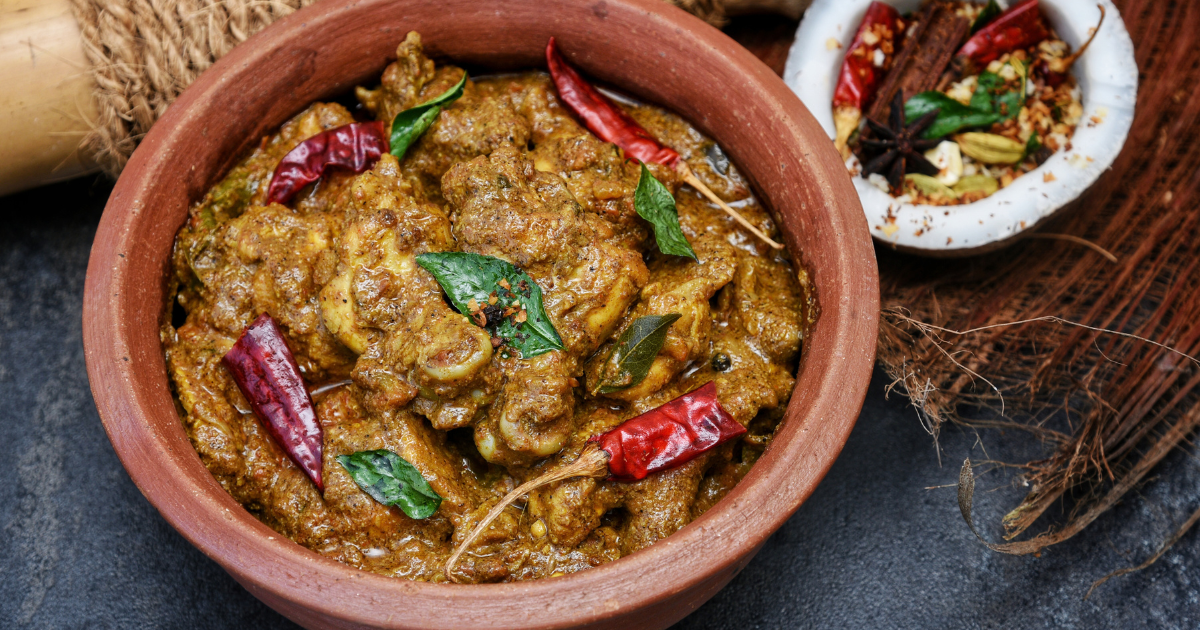
Chettinad chicken can be served with enough gravy to mix through rice or cooked down until the masala coats each piece.
How is a traditional Chettinad meal served?
A traditional Chettinad meal centres on rice, with gravies and side dishes served separately. At celebrations and hosted lunches, these are often arranged on a banana leaf. The meal follows a familiar Tamil pattern, with different gravies accompanying successive helpings of rice while vegetable dishes remain alongside them.
Serving on a banana leaf
Each guest has a leaf, with small portions of accompaniments arranged around the space reserved for rice. These might include poriyal, a stir-fried vegetable dish, and kootu, vegetables cooked with lentils. Other common accompaniments include pickle, which adds a sharper flavour, and appalam, a thin savoury wafer that adds crunch.
Keeping the dishes separate allows diners to combine them as they eat. A little gravy is mixed into a portion of rice, then eaten with vegetables or another accompaniment. Diners traditionally use their right hand, bringing together enough rice and sauce for each mouthful without mixing the entire spread.
Eating the meal in stages
The meal progresses through small helpings of rice, each eaten with a different accompaniment. Diners might begin with rice mixed with a curry, then have another portion with rasam, a thin, spiced broth. Towards the end, rice with plain curd, or yoghurt, offers a milder flavour after the seasoned gravies. The vegetable side dishes can be eaten alongside these servings throughout the meal.
An everyday lunch may follow this pattern with just a few dishes, while a celebratory spread includes more accompaniments and sweets such as kavuni arisi. At these larger gatherings, servers bring food to each guest’s banana leaf as the meal continues. The serving order varies between families and occasions, including when sweets are offered.
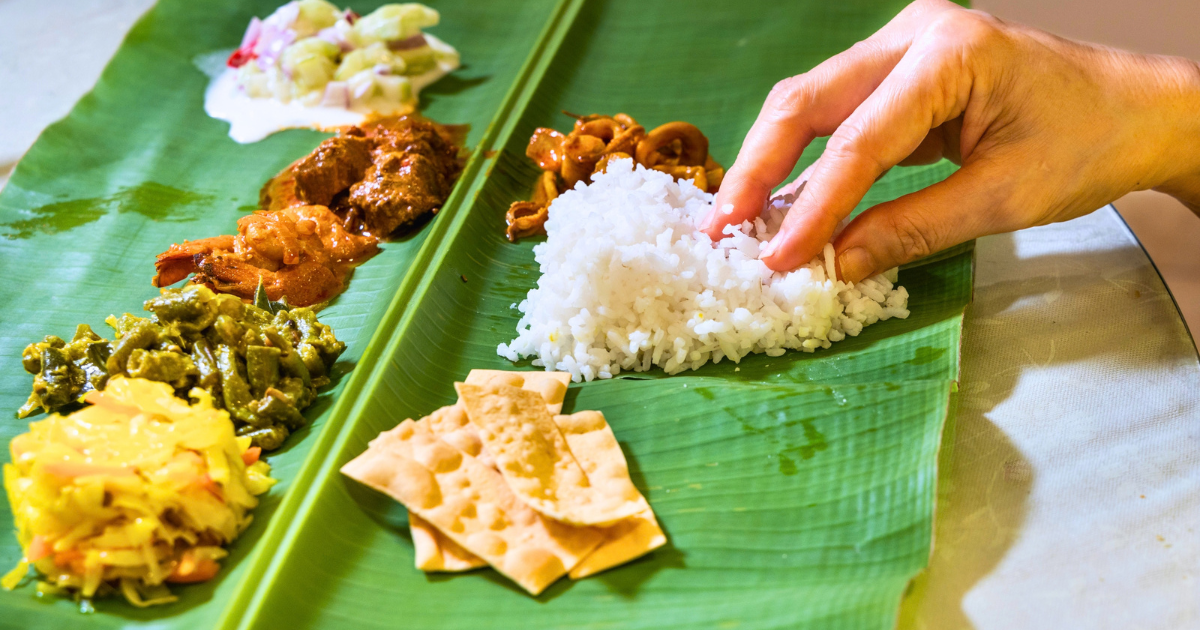
During a banana-leaf meal, diners mix each helping of rice with a gravy and eat the side dishes alongside it.
Explore Chettinad with India Unbound
India Unbound designs private journeys around regional food and culture, with itineraries tailored to each traveller’s interests. Our Flavours of South India Food Tour includes a stay in Karaikudi, combining local market visits and cooking experiences with accommodation in a restored Chettinad mansion. Contact our team today to start planning your journey.