
Periyar National Park lies in the forested hills of Kerala’s Western Ghats near Thekkady, where dense woodland surrounds the waters of Periyar Lake. Although the reserve is best known for its elephants and tigers, it is also home to hundreds of bird species. Great hornbills fly between the tall trees, Malabar grey hornbills call from the forest canopy, and Indian darters perch on the iconic dead tree trunks that rise from the lake.
The chance to see these birds in their natural habitat is part of what makes Periyar rewarding for birdwatching in Kerala. Guided forest walks offer opportunities to spot birds among the trees and listen for their distinctive calls, while boat trips allow visitors to observe waterbirds along the lake. With several species found only in the Western Ghats, Periyar is particularly interesting for travellers keen to discover the region’s birdlife.
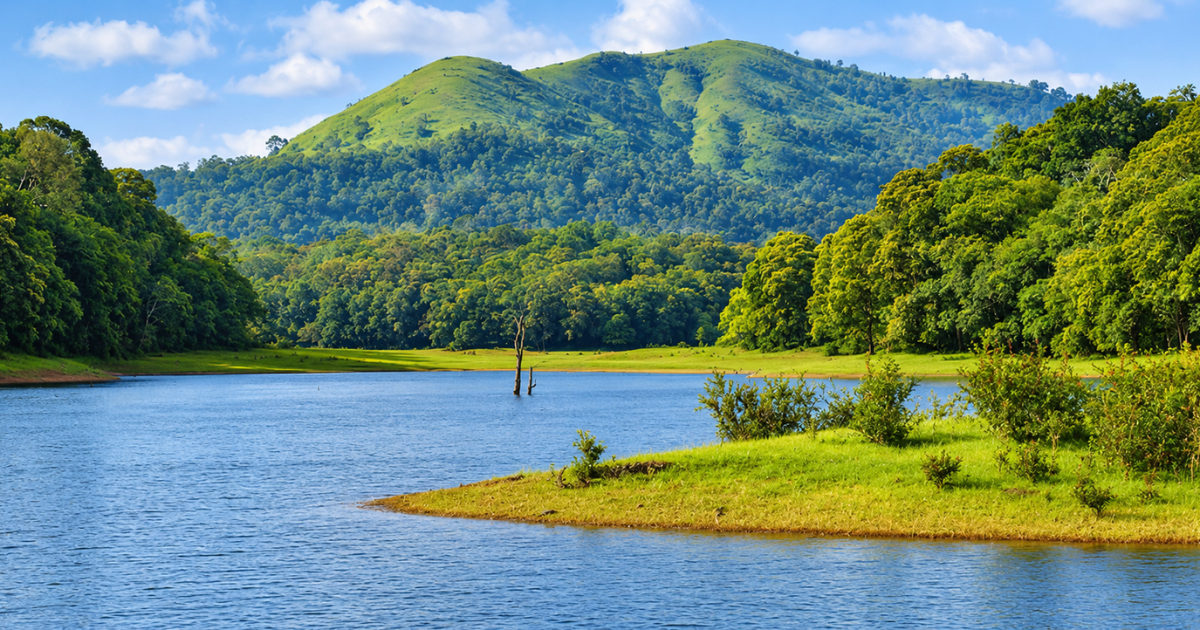
Periyar’s wooded shores and surrounding hills provide habitats for both waterbirds and forest species.
Is Periyar National Park good for birdwatching?
Periyar National Park is a rewarding birdwatching destination in Kerala, with hundreds of species recorded across the wider tiger reserve. Much of the landscape is covered by evergreen and semi-evergreen forests, where tall trees provide food and nesting sites for hornbills and other forest birds. Areas of moist deciduous woodland and grassland support different species, including woodpeckers, drongos and flycatchers that feed among the branches and undergrowth.
Periyar Lake provides another important habitat, with its wooded shores and dead tree trunks rising from the water attracting kingfishers, cormorants and other waterbirds. The dense forest can make some species difficult to spot, particularly those that remain high in the canopy or hidden among the foliage. However, listening for distinctive calls and watching for movement in the trees can reveal birds that might otherwise go unnoticed.
What types of birds are found in Periyar?
Periyar is home to a wide variety of birds, including several species native to the Western Ghats. Some, such as hornbills, are large enough to be noticed flying between the trees, while others spend much of their time hidden in the forest. The lake also supports waterbirds that visitors may encounter during boat trips. Here are seven birds worth looking for in Periyar National Park.
Great hornbill
The great hornbill is one of the largest birds found in Periyar and is also the state bird of Kerala. With its enormous yellow bill, prominent casque and black-and-white plumage, it is difficult to mistake for another bird once it comes into view. It spends much of its time among the tall trees, and its powerful wingbeats can often be heard as it flies through the forest in search of fruit.
Great hornbills feed mainly on fruit, especially figs, and help spread seeds throughout the forest. They also depend on large trees with suitable hollows for nesting. During the breeding season, the female great hornbill seals herself inside a hollow tree, leaving a narrow opening through which the male delivers food. She remains inside while incubating the eggs and caring for the young chick, making the male responsible for feeding the family during this period.
Malabar grey hornbill
Unlike the great hornbill, which can be seen across parts of South and South East Asia, the Malabar grey hornbill is found only in India's Western Ghats. It is considerably smaller, with grey plumage, a long tail and a curved yellowish bill that lacks the large casque of its bigger relative. Its loud, laughing calls are often the first indication that one is nearby, particularly when the bird is hidden among the leaves.
Malabar grey hornbills usually travel in pairs or small groups, moving between fruiting trees in search of figs, berries and other food. Although fruit forms much of their diet, they also eat insects and occasionally small animals. As they move through the forest, they carry seeds away from the trees where they feed, helping different plant species spread across the woodland.
Nilgiri wood pigeon
The Nilgiri wood pigeon is native to the Western Ghats, where it lives in evergreen and other moist forests. It is larger and darker than the pigeons commonly seen in towns, with a greyish head, maroon-brown body and a distinctive black-and-white chequered pattern on the back of its neck. This distinctive neck pattern is one of the easiest ways to identify the species.
Nilgiri wood pigeons spend much of their time in forest trees, feeding on fruits and berries. They can be found in mature woodlands with plenty of fruiting trees, although their dark colouring can make them difficult to spot among the shaded branches. They are often noticed when moving between trees or when their calls draw attention to an otherwise quiet part of the forest.
Malabar trogon
The Malabar trogon is one of the more colourful birds found in Periyar's shaded forests. The male has a black head, chestnut-brown back and bright red underparts separated by a narrow white band. Females have a softer combination of brown and orange, but both sexes share the long tail and compact body typical of trogons.
Despite their colourful plumage, Malabar trogons can be difficult to spot because they spend long periods perched motionless in the shade. They watch for insects from these perches, making short flights to catch prey before settling on another branch. Listening for their calls can help birdwatchers locate birds that would otherwise be easy to overlook.
Sri Lanka frogmouth
Despite its name, the Sri Lanka frogmouth is also found in the Western Ghats of India, including Periyar. Its appearance is not like most other birds in the reserve, with a broad, flattened bill, an unusually wide mouth and mottled brown or greyish feathers that closely resemble bark and dried leaves.
Sri Lanka frogmouths are nocturnal, spending their nights hunting insects and their days roosting in sheltered parts of the forest. They often rest motionless on branches, relying on their camouflage to avoid detection. Finding one during daylight hours can be particularly challenging, as its plumage blends so well with the surrounding vegetation.
Indian darter
The Indian darter, also called the Oriental darter, is a waterbird found around Periyar Lake. It has a long, slender neck, a pointed bill and dark feathers marked with silvery streaks along its wings. When swimming, most of its body remains underwater, with only its narrow neck and head visible above the surface. This resemblance to a swimming snake has earned it the nickname snakebird.
Indian darters hunt fish underwater, using their sharp bills to impale their prey. After diving, they often settle on exposed branches or dead tree trunks, spreading their wings to dry. The partly submerged trees around Periyar Lake provide convenient resting places, where visitors may see darters perched with their wings extended.
White-bellied treepie
The white-bellied treepie is a member of the crow family found only in the Western Ghats. Its black head and throat contrast with its white underparts and chestnut-brown back, while its long tail adds to its distinctive appearance. It prefers the dense, moist forests of the region, where it moves through the middle and upper branches searching for food.
White-bellied treepies hunt insects and other small prey among the trees. They sometimes join greater racket-tailed drongos and other birds as they move through the forest, giving birdwatchers a chance to spot several species in the same area. Their loud, chattering calls can also help reveal their location, even when they are hidden among the leaves.
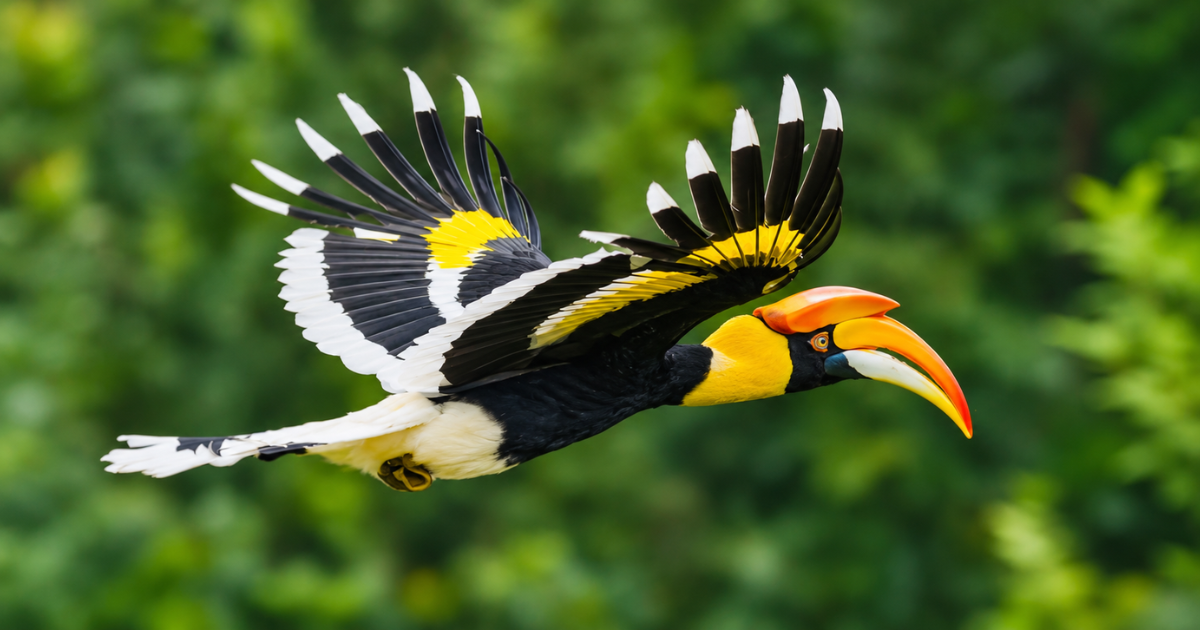
Great hornbills move between fruiting trees in search of food, particularly figs.
What are the best ways to experience birdwatching in Periyar?
There are several ways to experience birdwatching in Periyar, depending on the habitats visitors want to explore. Guided wildlife tours provide opportunities to look for birds among the trees, while boat trips offer a closer view of the lake and its waterbirds. Longer trekking and rafting excursions combine both environments, with more time to observe wildlife along the way.
Guided nature walks
Periyar's Nature Walk programme takes visitors along forest trails through evergreen and moist deciduous woodland, with some routes also crossing open grasslands. A trained local guide accompanies each small group, helping visitors identify birds by their appearance, calls and behaviour.
Along the trails, visitors may hear hornbills calling from the canopy, watch woodpeckers searching tree trunks for insects or spot smaller birds moving among the branches. Some species are easier to hear than to see, so guides often encourage walkers to stop and listen before searching the surrounding trees.
Boat trips on Periyar Lake
Boat trips on Periyar Lake offer a chance to observe waterbirds along the shoreline and among the dead tree trunks rising from the lake. During the roughly 90-minute cruise, visitors may see Indian darters perched with their wings spread wide to dry, kingfishers watching for fish from overhanging branches and egrets searching for food in the shallows.
Birdwatching is only part of the experience, as the surrounding forest is also home to elephants, sambar deer and other wildlife. Elephants sometimes come down to the water to drink or bathe, while deer may be spotted grazing along the banks. These encounters make boat trips an enjoyable way to discover more of Periyar's wildlife without having to venture into the forest on foot.
Bamboo rafting and longer forest treks
Bamboo rafting takes visitors beyond Periyar's shorter walking trails, combining a forest trek with a journey across the lake on traditional bamboo rafts. The half-day programme includes three to four hours of walking and around an hour of rafting, while the full-day excursion allows approximately three hours on the water. Along the forest trails, visitors can watch for hornbills and other woodland birds, before looking for waterbirds and wildlife along the lake's banks.
For travellers who prefer exploring on foot, Border Hiking follows the hilly boundaries of Periyar Tiger Reserve. This full-day guided trek crosses uneven terrain at elevations of around 900 to 1,300 metres, with views over the forested slopes and Cumbam Valley. Accompanied by local guides and a forest guard, the trek offers a chance to explore Periyar's hillier landscapes for travellers comfortable with a full day of walking.
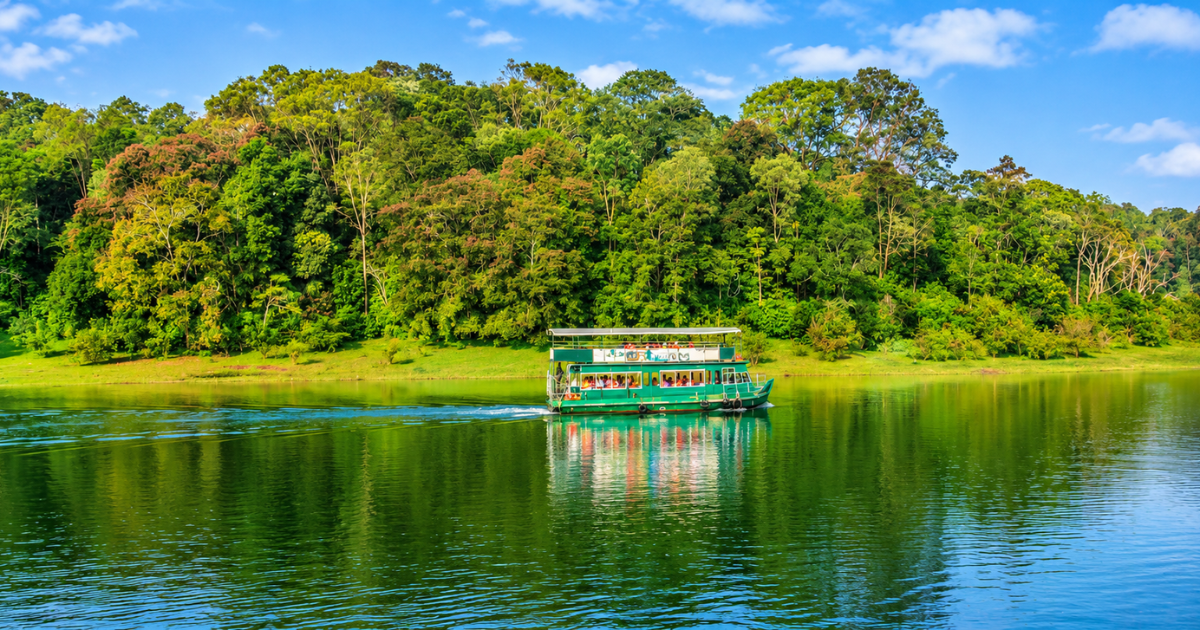
Boat trips on Periyar Lake offer opportunities to watch waterbirds along the shoreline and around exposed tree trunks.
What should travellers know before birdwatching in Periyar?
A visit to Periyar can include a morning of birdwatching or several days exploring the reserve's different habitats. Forest walks, boat trips and longer excursions follow scheduled departure times, so choosing which activities to include is an important part of planning. The season also matters, especially for travellers who intend to spend several hours walking through the forest.
When is the best time for birdwatching in Periyar?
October to March is generally a good time for birdwatching in Periyar, although the northeast monsoon can bring rain from October into December. Winter also brings migratory birds to Kerala, adding to the resident birdlife found throughout the year. During the southwest monsoon, from June to September, the forest is particularly green, but heavy rain can leave trails muddy and affect outdoor activities.
Early mornings are usually best for finding birds, as many species are feeding and calling before the day becomes warmer. Guided nature walks begin around 7:00 am, making them a good choice for visitors interested in forest birds. Late afternoons can also bring good sightings, particularly as birds become more active again in the cooler hours.
How much time should visitors allow?
A guided nature walk usually takes around two and a half hours, while a boat trip on Periyar Lake lasts approximately 90 minutes. Either activity can fit into a half-day visit, but the boating schedule requires visitors to be at Anavachal Parking one hour before departure, allowing time to reach the boat landing. A full day allows time for both activities, depending on their departure schedules, combining a forest walk with opportunities to observe waterbirds around the lake.
Keen birdwatchers may prefer to stay two nights in Thekkady, allowing time for more than one early morning outing. A second walk offers another opportunity to look for birds missed on the first, especially species that tend to remain hidden among the trees. Longer activities such as bamboo rafting and border hiking occupy much of the day and are included as separate excursions.
What should travellers wear and bring?
Lightweight, breathable clothing is suitable for birdwatching in Periyar, although long trousers and neutral-coloured shirts are more practical for walking through the forest. Some trails are uneven and can become slippery after rain, so comfortable shoes with good grip are important. A lightweight waterproof jacket is useful during wetter months, when leeches may also be encountered along forest paths.
Binoculars are particularly helpful for watching birds high in the canopy or hidden among the leaves. A camera with a zoom lens allows birds to be photographed from a distance, and a field guide can help with identifying unfamiliar species. Drinking water, insect repellent and sun protection are also worth carrying, especially for longer excursions.
How can birds be observed without disturbing them?
Birdwatching in Periyar is best approached quietly and patiently. Moving quietly and keeping a respectful distance allows visitors to observe birds without interrupting their natural behaviour.
Visitors should remain on designated trails and avoid approaching nests or roosting birds. Feeding wildlife, using flash photography or playing recorded bird calls can disturb birds. Local guides can help identify suitable viewing spots while ensuring wildlife is left undisturbed.
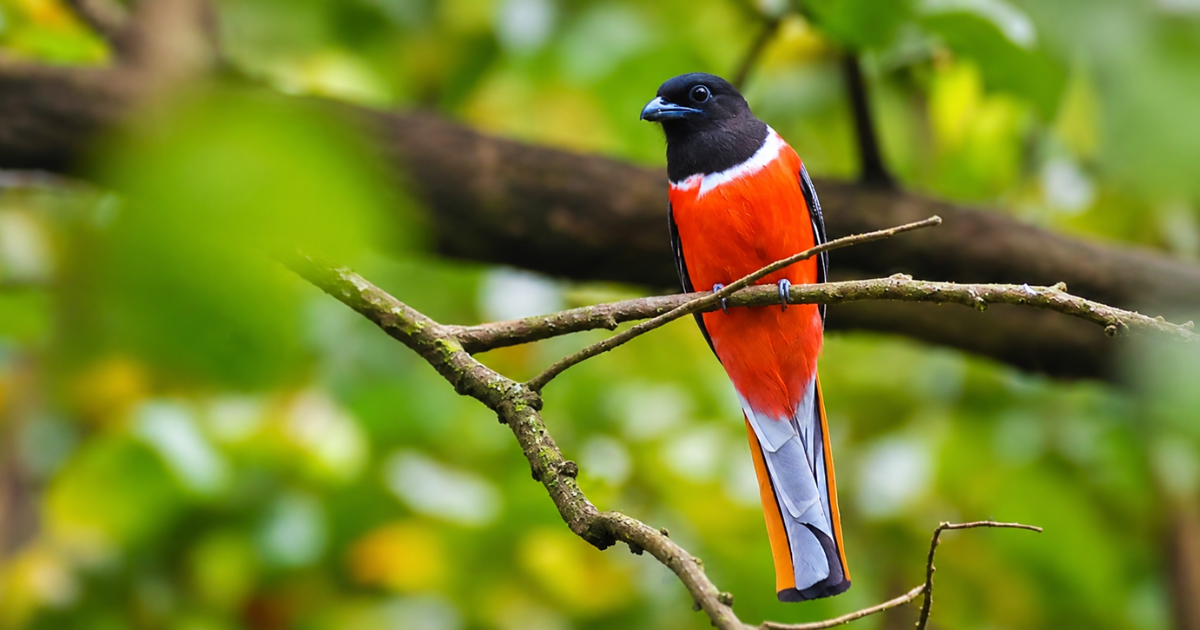
Despite its colourful plumage, the Malabar trogon can be difficult to spot when perched motionless in shaded forest.
Discover the wildlife of Kerala with India Unbound
India Unbound designs private journeys across India, with experienced local guides and carefully chosen accommodation. Our Kerala Wildlife Tour includes Periyar National Park, where travellers can explore the forest and discover its rich birdlife. To plan a Kerala journey suited to your interests, get in touch with our team.